Pete Bishop (00:23)
Hey, Drew, how's it going?
Drew McQuarrie (00:26)
Great, I'm really glad to be here. How are you doing today?
Pete Bishop (00:29)
Not bad. We're going to pretend that we didn't just already record half this episode because we had a mic failure and pretend like this is the first time we started here. the, I'm excited. know, you, we haven't had a chance to really chat too much and I use these podcasts a little bit as a way to catch up. So this is, this is pretty thrilling for me to have you captured. And we've got, I think about five or six hours together here. So this will make a great podcast.
Drew McQuarrie (00:54)
That's fantastic.
Pete Bishop (00:56)
You, among other things, I know you're busy kind of rolling out AI across paper leaf. You have a similar mandate as me, actually. And part of your job has been quite a fascinating area, which I think a lot of people are really excited about, which, or maybe excited is the wrong word, maybe scared shitless about would be this new area of AI search where
Would you want to describe what that is?
Drew McQuarrie (01:22)
Yeah, for sure. So basically we're transitioning from sort of the old version, which was SEO, in case anybody doesn't know that search engine optimization, where you would write keywords, phrases, that sort of thing, and Google would find them and then return your website as a result quite frequently. We're transitioning to something called GEO, which is the Generative Engine Optimization. And that's what you see when you see those AI summaries at the top of the page. They are...
pulling specific information from different websites and displaying it as the answer. we've definitely moved from those broken, I don't know whether you remember this, but I remember typing in Halifax, vegan, Indian restaurant. And now all you have to do is just say, what are some vegan restaurants in Halifax? And it understands and it pulls that answer directly. So yeah, we've definitely moved to that. And GEO is a little different than SEO as well, obviously. There's some different things you have to do to rank.
in GEO.
Pete Bishop (02:19)
Yeah, I've heard and I suppose, you know, SEO was always a little bit of a mystery. Google never really said exactly what was ranking and how to rank and all that stuff, because on purpose, it didn't really want SEO experts who are essentially trying to game the system a little bit. The idea is build good content and you will naturally come to the float to the top. If that's the idea right behind the
the intent of these things.
Drew McQuarrie (02:46)
Yeah, for sure. That's actually a really interesting point because it's sort of becoming that a little bit more. If you have the answers people are looking for, you will naturally be referenced in the AI summaries. I mean, we've chatted a bit about this. is some trustworthiness that they take into consideration. It's that whole EEAT experience, expertise, authoritativeness, and trustworthiness. That's really becoming... This is sort of... GEO is sort of the end result of that becoming coming to the internet for answers.
Pete Bishop (03:16)
Right, right. And there used to be kind of something, there's a bit of a middle ground here, or maybe the evolution of this, was AEO. And I've heard this being confused now with AI search. Some people are calling AI search AEO. We're choosing GEO here. But do you want to just talk a little bit about what AEO in my mind actually is?
Drew McQuarrie (03:38)
Yeah, for sure. I think that's probably the one that confuses most people because it sort of gets lumped in with GEO now and it just feels like it's new, therefore it's probably the same. AEO, sorry, the definition of that is answer engine optimization. And basically that sort of became what you would try to work for once Google started returning answers. I don't mean the AI summaries at the top. Sometimes you would go through an AI and Google would just have a quick blurb at the top.
that frequently had the answer you were looking for. Sometimes it was pulled directly from a website, but that was what AEO was. It was like little snippets from the website, but it wasn't AI actively looking for them or making any decisions. was really just sort of a, here's the question and here's the exact answer.
Pete Bishop (04:22)
Right, right. I remember there being all kinds of tricks to try and get into those. I believe Alexa and Google Home were using the same sort of patterns to surface answers as well. And that all seems to be getting squeezed out a little bit with AI. ⁓
Drew McQuarrie (04:39)
I think so. Not only because I do believe it is, even if you just go online, people aren't talking about AEO anymore. They really are talking about GEO, because that is the target now. You do want to optimize for GEO. Obviously, we chatted a little bit about this. SEO is still important. You can't just give that up because it is still being used. But GEO is the way of the future.
Pete Bishop (05:00)
Yeah, I feel like some of these ranking factors are still the same from SEO, but some of them are quite different. Like keywords I heard have been kind of nerfed down quite a bit. In my mind, it's not a bad thing because that was one of those, know, here's how you game the system. would, know, keyword stuff, as they say.
Drew McQuarrie (05:21)
Yeah, yeah, yeah. That's sort of one of the more interesting ones to me because keywords were so important and now they are less important. AI doesn't really look at keywords. They look at content, they look at answers, they look at very specifics. I think if we want to get into it a little bit, basically what AI wants is it wants a question followed by an answer because that's what it's trying to do. It's trying to answer the question.
not trying to give you a series of websites to look at where you have to find the answer. It's trying to give you the answer.
Pete Bishop (05:52)
Right. Yeah, very different. Hey. the, so if I'm a, a company and, obviously my SEO rankings are going down. I think everyone's noticing this over the last year. What's happening. What what's happening with just in general with people getting to websites.
Drew McQuarrie (06:09)
Yeah, that's a great question. I think there's a lot of confusion on exactly what's happening there. Some of it is what people are thinking. basically, I know that the click-through rates are dropping by 35 % up to 50%. And that 50 % isn't for just little websites. It's for big websites as well. Like if you were number one ranked, you may be losing 50%. And to your point, basically what's happening is users are getting the answer before they ever click on a link.
65 % of searches are ending without a click. And that's even before there's an AI summary at the top. Once there's an AI summary at the top, that jumps to 80%. So they're just not even clicking. Yeah, it's kind of shocking, but that's what's happening.
Pete Bishop (06:52)
Right. And it felt like a pivotal moment once Google flipped the switch on AI answers, because they have so much power. Obviously, that was where the volume of search went is Google, and they run the search world they have forever and make all the rules. And the second they flipped that switch, it just felt like suddenly we're all using AI, whether we want to or not. And I think that all the other LLMs like
ChatGPT and Claude and whatnot. For the longest time, about six months ago, I think all of that together was making up about 4 % of search volume. And now that is growing very rapidly, but that AI answers from Google really was a game changer.
Drew McQuarrie (07:35)
Yeah, I couldn't agree more. People are starting to use their whatever LLM they're using. Chatgy BT, I'm hearing is primarily the big one right now because it sort of came up first. And they are using that for searches. it's exactly what you're saying. Those AI summaries at the top of Google, that's where it really exploded. I'm not even sure. If I was to ask my parents,
Do they think they're using AI? They would say no, even if they're using those summaries at the top of the page. Like I think it's just becoming so ubiquitous. It's just there everywhere now.
Pete Bishop (08:08)
yeah, this notion of people being dragged into AI, whether you want to or not, I think you either the tools are evolving and you're just you have to use them if you want to use the tools or you're actively trying to pursue adoption. in this case, it's very much.
Yeah, if you're searching, you're using it. And I don't think there's any option to not. We talked a little bit about even the environmental impact on AI search versus the traditional search,
Drew McQuarrie (08:35)
Yeah, it is a big thing. There is a much larger cost for the AI searches. Every time you ask a question, you get another, you basically send a request. It has to go out to the internet and it comes back and there's an environmental cost for every single one of those. I know at Paperleaf, what we are trying to do sometimes is we are trying to batch, do no more than 15 questions to an AI and then start a new...
start a new conversation because it has to go through all of those every time and it just sort of it's not exponential but the number of those requests goes up and every single one has an environmental impact which is crazy to think about.
Pete Bishop (09:10)
And that's why you stopped
saying thank you at the end of your queries, right?
Drew McQuarrie (09:15)
Yes, yeah, yeah,
we chatted about that a little bit. I always say thank you. It's just habit. I feel better when I say it, like I'm not being rude. But yeah, it costs for me to say thank you because then they have to come back and say, thank you for saying thank you or whatever it is. So I've stopped doing that. I feel a little ruder, but I feel better about the environment.
Pete Bishop (09:34)
Yeah, I don't blame me for doing it. I try to do it too. And now I'm probably going to change just because of this conversation, but it felt like a good muscle to keep using because I feel like you can get pretty directive and harsh with AI. And I don't want that to like bleed into the rest of my life. Right.
Drew McQuarrie (09:55)
100%, especially the more I continue to use AI, it's becoming much more of almost like an assistant or a partner or somebody who's co-working things with me. And I definitely don't want that to bleed into my work relationships or personal relationships at all.
Pete Bishop (10:09)
Okay, well let's dive into it a little bit. You know, if I'm a company that wants to play ball here, I'm seeing my SEO drop. I know that I'm missing out on a ton of my audience. What do I do? How do I start optimizing? What's the biggest fish to fry, so to speak?
Drew McQuarrie (10:28)
⁓
Usually what the... can find online what users are searching for. And I believe if you look in Google Console, if you're using that, you can see the questions that have been returning users to your site. If you can answer those on pages, it's really, really good. You can go online and find them other ways. But yeah, if users are searching for something like, what are the best running shoes? You want that to be on your website somewhere, like...
What are the best running shoes? And then answer it immediately. Now I realize that's a bit of a black and white. Best running shoes is a little bit specific and you probably can't answer that. But you can answer things like, is a membership to this club worth it? And sometimes you'll find an answer where somebody says, yeah, for example, if you have an AMA membership type thing, one toll will pay for it. That's the kind of thing the users are looking for. Like they want those specifics. So what you want to do is you want to start by answering questions
right at the top of the page. AI doesn't always go down the full length of the page. As we talked, there's this environmental cost. There's also an actual cost-cost to it. So AI might, if you have answers at the bottom of your page, AI might never reach the bottom of the page and know about those. So you want them at the top of the page. When you do have longer pages, you want it formatted differently. There's something that is referred to as content chunking, and you want smaller sections with basically
Pete Bishop (11:21)
Hmm.
Mmm.
Drew McQuarrie (11:45)
one relevant point in each one that AI can easily digest. It's a little weird, AI likes easily... Think of it this way. If you wanted to quickly scan a page and get an answer, that's kind of what AI wants. It just wants to be able to scan the page really quickly and find the answer. So you want to write your content with that in mind.
Pete Bishop (12:04)
Yeah, I heard a reference to an impatient toddler when it comes to getting results, but it's just like, hey, I want to grab something quickly and I want to look smart about it. So that leads to kind of the other side of just this authority side of giving AI to some degree, some confidence that this is a credible source. So if it's finding the answer.
which you're talking about rewriting stuff, now also being, knowing that this is coming from some sort of authority. So how the heck do you do that?
Drew McQuarrie (12:36)
Yeah, there's a couple of things you can't control, but the more you're mentioned on other sites and other places on the internet, socials as a trusted source, it does take that into consideration. One of the things is you want the information on your website to come from authoritative sources. So if you're a law site, make sure all your law blogs are written by a lawyer.
not by somebody else. It comes across as, this is a subject matter expert. They know what they're talking about. Therefore, this source can be trusted more. We discussed it. There's a bunch of brand that's really important. So keep working on brand. I believe you actually said it is sort of one of those things that you may already have or not. And that's a little bit harder to bring into the factor if you don't already have it, but it is important. So yeah.
Content that is unique, if you have unique data, AI loves that as well. So that will get you sourced.
Pete Bishop (13:23)
Mm, right.
Yeah, we were talking a little bit too around just surfacing some of the... So even if you are a lawyer and you're putting your name at the bottom of an article, actually bringing up your credentials and your background and who you've worked with and your time with the company, even though it might seem a little bit over the top, AI really does look for that versus just a name.
so it can understand, oh wow, this person really does know what they're talking about. I can be very confident when I pull this pull quote or FAQ or whatever I'm grabbing.
Drew McQuarrie (14:03)
Yeah, it's a great point. If you are writing a blog and you are putting your name on it, brag about your credentials. AI wants to hear it, and this is the perfect spot to do it. They'll take that into consideration, and you will be more likely to be sourced when it comes to the summaries.
Pete Bishop (14:13)
Yeah.
Yeah, yeah, exactly. So what are some other bits you can do? So we talked a little bit about like formatting content and the authority piece, which I know are fairly big signals. Are there other bits that you can do?
Drew McQuarrie (14:32)
Yeah, there's a couple different things. If you've got a developer working for you, they can do something called implementing schema. And the simple definition of that is it's a way to mark specific content as a specific answer. So that might be your office. You can do that. You can do books. There's schema for almost everything. Even if you don't have a developer working for you, there's a few SEO plugins that will help out with that.
I believe they are paid, but they will help mark the schema. yeah, that's one of the things you can do. think that content is definitely the biggest one, but yeah, anything you can do that is unique is also really great. If you have a calculator of some time type, like a mortgage calculator, the AI won't embed that, so people will go and see that. If you are an event place or...
We've worked for a sports club and they've got the events there, you have to sign up there. That's all sort of stuff if you want people to actually be going to your website as well. So it's all about unique data and the formatting to get quoted in the GEO, the summaries, but there are also things you can do to have people actually go to the sites as well.
Pete Bishop (15:36)
Yeah, it feels like that almost plays double duty too, because you're right. It's another reason to go to the website because we, know, the whatever it is 60 % or 70 % of people who aren't reaching your website, which I think is the, the stat, or at least it's getting close to it from a search point of view, um, really means that your primary audience is robots, right? Which, I think is
crazy that we can talk like this so quickly. I thought this was a long way off.
Drew McQuarrie (16:10)
I did too. The numbers that came in, the last time I did the... The funny thing is that we're saying numbers now and I'm not sure when this is going up. Things may have changed by the time between the recording of this and when this actually goes up, but it's just been so fast. The last six months have changed so much and I didn't expect this either. I wasn't expecting the actual numbers that are happening. One of the things just to keep in mind if you are optimizing for GEO is...
I was asked at one point, should I just have a question and answer on a bunch of different pages? And I was like, no, it still has to be usable by humans because they will be coming to your website. So there's still this balance of, it was the same thing with SEO. You didn't just dump a bunch of keywords onto the page and make it unreadable by humans. So you still have to take that into consideration, but it is shocking how much the internet is not for humans anymore. Just the answers.
Pete Bishop (16:57)
Yeah,
yeah, it's and it's I remember explaining this to someone and it was someone in content and they're just almost heartbroken because there's so many beautifully written articles that you know from a human point of view are great to read and then just in this world it's they would be invisible because that bot's not going to spend the time to wade through those you know
beautifully written opening paragraphs to get to the things that it's actually trying to get to. So it will just literally move on and go find something else. And so there's this, there's this shift in writing, which I've heard about is like, we're not, we're not writing for humans as much anymore so that robots can scrape the content. We're writing for robots so that they can re-explain things back to humans. which I think is a really big.
shift in how we think. it's not a, I don't think it's a good thing, but it is something where it's like, I do think we kind of have to, if we want to play ball here and actually have any of our stuff being, you know, surfaced in AI.
Drew McQuarrie (18:02)
If you don't want this to happen, you're not going to stop it. So it's sort one of those things you sort of have to get on board with. What I find interesting is this is such a big change that younger people who are growing up might not even understand what a Google search was in the same way that they do now, because you'll just be doing it through AI. And the results are this. it'll be interesting to see what happens in the next even six months. But yeah, in the next few years on how this
how this transitions to even becoming more entrenched in AI. ⁓
Pete Bishop (18:32)
Yeah, I've heard of people starting to write content specifically for a GEO, not even caring if humans see it or not and keeping some of their... It sounds crazy saying it, but you know, keeping their human content, you know, safe, but also starting to create robot content. I have no idea if that's a good strategy or not at the moment. It feels like double duty, but...
I get the idea of why you would start thinking like that.
Drew McQuarrie (19:00)
Yeah, I mean, it is with the number of people trusting that AI summary at the top. You do have to be thinking about the fact that a robot, an LLM is scanning your site and it will be returning information to people. So you do want your site to be in that summary if possible. I know we chatted about the click through rates being lower, but the thing about what if somebody does click on one of those reference points, the ⁓
Pete Bishop (19:24)
Mmm.
Drew McQuarrie (19:24)
the conversion rate is much higher. Like I believe that it's 35 % higher when they click through as opposed to somebody before an SEO just sort of organically clicking through. So it's much more deliberate traffic when it does happen. So you do want to be sourced if you can.
Pete Bishop (19:41)
Yeah. And I don't think like in my mind, I don't think that the, it's the death of websites by any means. And they're still kind of paid. Like when you are directing people to something, you're obviously going to point them at your, your assets. think what we're talking about mostly is search when, when as a user, I'm initiating the process. I'm starting the search. That's the part where it's like, yeah, your website may or may not show up.
bits and pieces are like this robots kind of disassembling your site and reassembling it however it sees fit on the other end, which is strange because it does feel a little bit like you have this middleman now that is potentially changing the narrative of your brand a little bit, but certainly kind of changing a little bit of your attribution. You don't really understand now as much as you used to when people were converting onto a website.
of exactly what they're doing, right? You kind of lost a little bit of this connection.
Drew McQuarrie (20:40)
Yeah, having you use the right term having this middle man does sort of muddy the waters a little bit on exactly what's going on and how people are getting to your website and where that information is coming from. So it is it is interesting. I know that some people aren't happy with the way this works, but as we've discussed, it would be long term risky if you didn't let the AI crawl your website like it is important to be involved in this to stay current.
Pete Bishop (21:02)
Yeah.
Drew McQuarrie (21:03)
It's such an interesting thing because you have to trust that the AI is referencing your brand correctly. You don't have any control over this, so you just write the content as best you can. That's really all you can do right now.
Pete Bishop (21:16)
Right. So it feels like a lot of this at this moment is our people optimizing content that they've already got and trying to make it kind of get up to speed with these new crawlers. And I've heard all kinds of things like it was funny because just yesterday, which will date this episode, but, tick tock, I think opened up a travel, a trip planner. So you can actually book, hotels and stuff on tick tock, which is crazy. So I think it's.
you know, as you're thinking through your content and making sure that even stuff like your e-commerce is scannable because there's probably a future where, you know, people can transact and book and buy and do all these things with, again, without going to your website, which is, I don't think that's far away.
Drew McQuarrie (22:03)
I don't either. I don't know whether you recall that I believe it was Google had an assistant that they created that they'd added a bunch of ums and ahs. This was even before AI, but you could ask the assistant to call a restaurant for you and book something and they sounded just like a person. And so it's that interaction that you'll be able to do with web things through the AI, the exact same thing where you'll be able to say.
Pete Bishop (22:12)
Ha ha ha
Drew McQuarrie (22:24)
buy me buy I need a new pair of sneakers. I realize I'm talking about sneakers a lot, but yeah, buy me a new pair of sneakers and your AI will already know your size, your preferences, and they will just go out and purchase it for you. That is where we're that is I'm I'm I'm 90 % confident that's where we're heading.
Pete Bishop (22:29)
Hahaha
Yeah, is speed of light, the stuff. then the other thought was just, you know, as, as we move through this, I think the next step is all these LLMs right now are mostly text based. but there's probably not too far from here where we have our own interfaces, right? So we can have, let's just pick on Claude. You can be like, Hey, I'm booking a trip to Scotland and it will pull up.
a nice big image of Scotland and be like, I would like to know what are the top 10 hiking trips in Scotland. And it'll pull up cards like as an interface with images or videos, links and descriptions of the top 10. And they might not all be coming from one place. It might be pulling them from all different websites, but it's building you an interface. your, we call it presentation layer, as you would know, your presentation layer is now controlled by the user, not by the destinations, right? Which I think is.
when I think about the implications of that.
Drew McQuarrie (23:35)
It does feel like you're losing control of that type of thing because you can't control what the AI shows. You are losing a little bit of your presentation later. Again, this is one of those things. We're being swept along with it. It wasn't a choice people made. I want to lose the control over this. It's just what's happening.
Pete Bishop (23:43)
Right.
Yeah, yeah, and the...
So maybe it just, becomes your content becomes your IP in so many ways. It's like you, know that your content is going to be passed around and reassembled, but that's your, that's your, your cache is, is making the videos and, and videos to me still feel like a fairly big brand piece because that's the harder one, I think right now at least to disassemble, right? So your video is going to stay roughly intact and have the same
you know, brand impact as it would anywhere else. It's the text that I worry about because it just get, it can get grabbed and also reworded on the fly.
Drew McQuarrie (24:31)
Yeah, for sure. I mean, it is a large language model. It loves text. All of them love text. So yeah, the text is going to be the first to be misrepresented if something is going to be misrepresented.
Pete Bishop (24:36)
Right.
Right. So you've done, I think you've done a couple of workshops on this already. How's the, how's the sentiment when you're talking to organizations, do you find it's, it's fearful? Is it angry? Is it excited? Like, how do feel people are reacting to this?
Drew McQuarrie (25:00)
I think the biggest thing is there's some fear because people are seeing their clicks go down. They definitely are. There's always positive news. Lots of sites have good content. Lots of sites have things that will still, that AI can't replicate just yet. And anyone with that sort of thing has at least an undertone of positivity to it. I do find that...
It's not hopeless. know people sometimes are feeling a little bit depressed because if you lose 50 % of your click through rate, that is pretty big, but it is not hopeless. The people that we've been working with have been, I think they're doing the best that, they're doing better than a lot of other groups that aren't even looking into it. If you're not doing GEO and your competitors or anything like that,
are doing it, you're going to be behind. Like the sooner you can get into GEO, the better it is. But it is nerve wracking for a lot of people that I've chatted with just because it's such a big change from all those clicks to very few clicks and how their information is being portrayed again.
Pete Bishop (25:59)
Mm-hmm.
Yeah, I found similar, although on the flip side, you know, if your competitors are not doing this, there's a massive opportunity for you to leapfrog ahead in areas that maybe you weren't able to be competitive before, right?
Drew McQuarrie (26:18)
100%. So anytime I talk with somebody and they're like, I don't know about AI, like, I know you don't know about AI, but you should be looking into this because it's exactly that. If your competitors aren't doing it and you are, that is a good thing.
Pete Bishop (26:34)
Yeah, cool. Drew, I feel like we should have maybe a part two, maybe a part three, part four as this unfolds over the next year, just because it does feel like such a shifting sands for sure. But, know, it's comforting to know that there are people like you who are staying on top of this. And yeah, it's been a pleasure to actually just nerd out with you a little bit on this topic.
Drew McQuarrie (26:58)
Yeah, me too. And if we want to do a part two or three or four, I am absolutely in. ⁓ It's funny because if this was something else, I'd be like, I might not have anything to talk about by then. I will have something to talk about even in a couple months.
Pete Bishop (27:02)
Hahaha ⁓
Yeah. ⁓
Yeah, no, that'd be awesome.
Well, Drew, thanks again. Thanks for coming on the show.
Drew McQuarrie (27:16)
Yeah, absolutely. Thanks for having me. And I look forward to doing this again sometime.
Pete Bishop (27:20)
Sounds great. Talk to you soon.
 Host
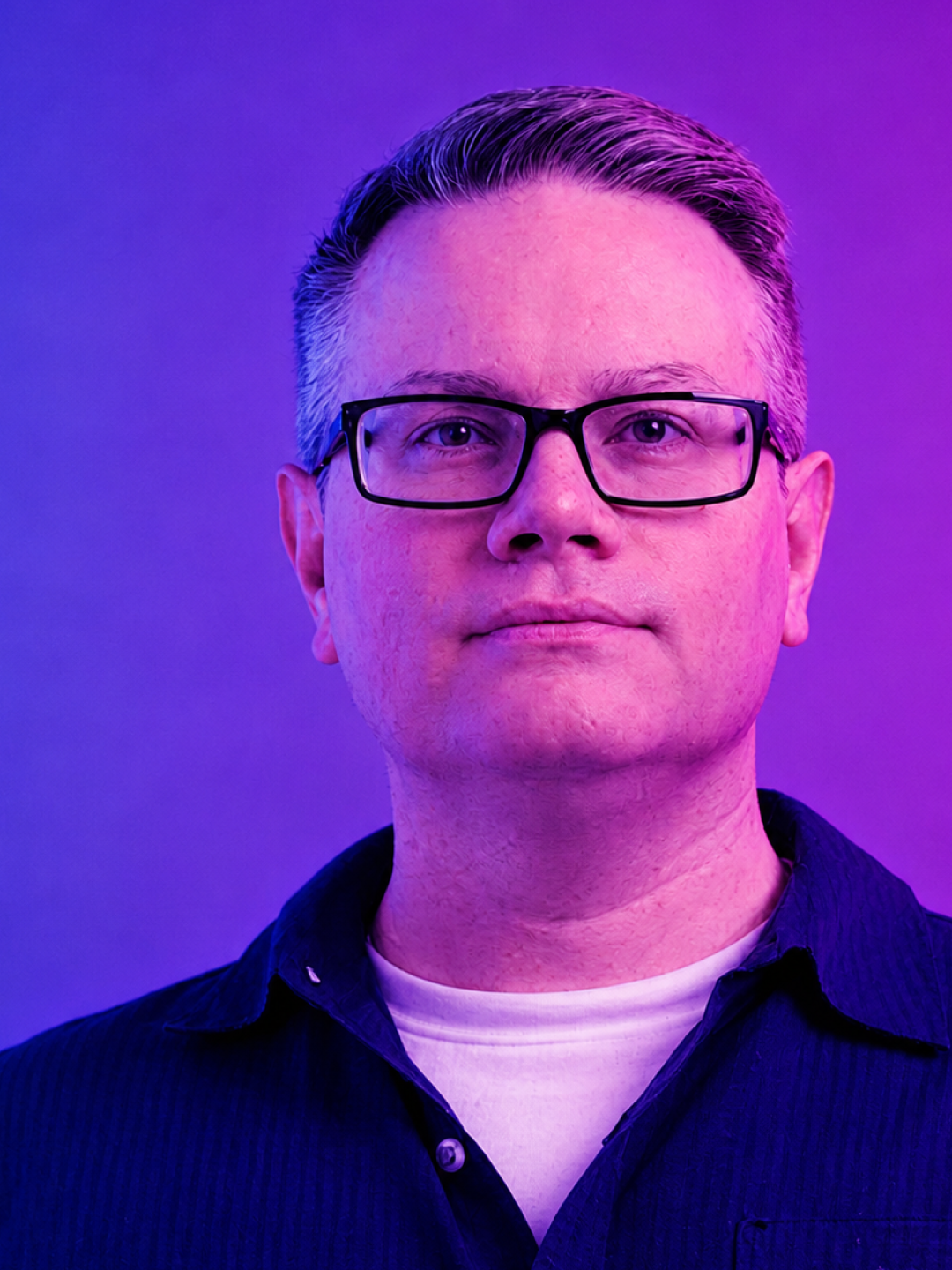 Guest