Pete Bishop (00:23.091)
Hi, Santana, how are you? Not bad, it's nice to see you again. It's been a while.
Santana Blanchette (00:24.662)
I'm good. How are you doing, Peter?
Santana Blanchette (00:29.238)
Likewise, it's been a minute. We've been, it's been what, a couple years now, hey?
Pete Bishop (00:33.883)
Right, right, and I think I saw you at an event, like across a crowded room. I was over, it was some startup networking event, maybe a year ago. Did you, does that ring a bell?
Santana Blanchette (00:44.782)
Probably you and I, I always joke that we're professional extroverts. And whether that's true to our personal life or not, we sure play one on TV, don't we?
Pete Bishop (00:48.627)
Yeah.
Pete Bishop (00:52.082)
You know, it's funny, think in, was getting out there and I feel like I can be, it's like a muscle for me if I don't like constantly use it, I lose it. Like it doesn't come naturally for me to talk to people or put myself out there. So I think just before COVID, I was getting in a good spot and then COVID gave me the perfect excuse to hibernate again and just never see the light of day. And it's been a long haul trying to get back to it.
Santana Blanchette (01:21.551)
that yeah learning how to like talk to strangers is it's it's something that I think a lot of people wish they could automate don't they?
Pete Bishop (01:28.145)
Yeah, I think we're getting close to that. Hey, like pretty soon. I saw it. So this is a little off topic, but someone was telling me there was a big interview at one of the big kind of law firms like Deloitte or something like that, but they got something like a thousand interviews. And one of them was there's two, one of them was a person with his avatar, digital avatar beside him and like a split screen like this.
And so he's like, when you're hiring me, you're also hiring my my twin. And then there was another fellow who just had his digital twin in the interview and he wasn't present. And yeah, I don't know what you think of this. But at the end of it, the guy who was hiring was like, yeah, at first I was like offended almost by it. And then as I was thinking about it later in night, I'm like, oh, or is this like the exact type of person we need to
get into the company. How do you feel about that?
Santana Blanchette (02:28.11)
I think what makes AI currently usable is human discernment. So I think we should be using it, but I think to suggest that it can like outright replace right now is that's a bold move, Cotton.
Pete Bishop (02:34.202)
Yeah.
Pete Bishop (02:42.128)
All I was thinking about is like, my god, this is like a movie where I can make like 20 of myself and hold down 20 jobs at once.
Santana Blanchette (02:51.48)
Totally. And then do them all poorly because we still need fact checkers, right? What was that recent article I saw? And I might be just spewing misinformation here, so correct me if I'm wrong or cut it out. wasn't like, didn't one of the AI chat bots get like really obsessed with goblins or like there was like some special interest hyper focus that it had on something and it just wouldn't stop talking about it? Like it just, it's not there yet.
Pete Bishop (03:10.19)
Pete Bishop (03:14.382)
Bye.
Pete Bishop (03:19.126)
Yeah, I, where did I hear this? It was.
someone was using it and every email was ending off with thanks for tuning in. And he's like, I didn't write that, but it kept adding it to it. And someone explained to him is like, that's because his most of his data is trained on YouTube. So it's constantly treating things as if they were episodes or, you know, videos or whatnot. But either way.
Santana Blanchette (03:44.344)
Although that's a pretty great sign off, isn't it? Like, isn't that a, you just like write a long rambling email. Thanks for tuning in. I kind of like it, like unintentionally great.
Pete Bishop (03:52.206)
Yeah, totally. Well, I can't wait for one of my digital twins to get fired one day and you find out, hey, Peter, well, you got fired for spewing, you know, Nazi propaganda at work. so you're out, right? Because that's I think wasn't grok getting hit with that the whole time.
Santana Blanchette (04:09.326)
yeah, but that's not surprising at all. I don't want to get into it, but I think the data that Elon's training his stuff on is questionable at best.
Pete Bishop (04:12.365)
Ha
Pete Bishop (04:17.453)
Yeah, I think, you know, we're getting to our topic here because I feel like all of these LLMs are a product of their training data to some, well, to all degree, right? And then you look at something like ChatGPT, which has probably got the biggest data set out of all of them. But then you've got to really worry about the quality of data coming in and then what's creeping into your outputs, right?
Santana Blanchette (04:44.29)
Yeah, mean, something that we always say in our data, like on our data team is garbage in garbage out, right? And I think that's true in any technology. Like it's only as good as what you're feeding it. So the information on the internet is notoriously unreliable. which is to say that I imagine that a lot of the information that we're getting on some of these AI tools is worth our, scrutiny at the least.
Pete Bishop (04:54.401)
Mm.
Pete Bishop (05:02.475)
Mm-hmm.
Pete Bishop (05:12.092)
yeah. And I don't know. Like I know that some of the models I don't know, I think it's chat too, right? Along with, I think chat has access to YouTube, but you think of all the comments, like that's usually the, the dumpster fire of the internet is in the comments on YouTube. And so if that's where, you know, you're getting some of your training, it's like, God, I can only imagine. I don't know if that's true, but I feel like that's on the table for the training data. I don't know.
I don't know if that's true, I should probably double check that.
Santana Blanchette (05:43.363)
I think the top places that it pulls from are at current, depending on the platform, obviously, but I think right now it's Reddit, YouTube, Google, and I don't know the other one, but there's, there's quite a few places they're pulling from. And I mean, I don't want to poo poo it entirely because without crowdsourced information, we wouldn't have Wikipedia and Wikipedia is pretty great in many ways. but that was like democratized by users, right? It can be edited by anyone whereas AI is a very specific handful of people that are
creating and moderating these systems. I that some of these publicly sourced things can be awesome. It's just who has the keys, who's driving.
Pete Bishop (06:22.314)
Yeah, who knows, right? But so this was interesting because I wanted to chat to you because while you're a writer, and I definitely admire the work you do, as always feels very genuine and heartfelt. I just getting your take on, you know, obviously the change and I think writing was the first forgive the expression, but low hanging fruit because everything's text based and you know, the outputs are generally writing. So people were using them to respond to emails or
generate draft documents or who knows what, but there's been this influx of writing and just getting your sense of the quality. know a lot of people talking about AI slop these days. Do you think it's helped more than it's hurt or where are you at with this?
Santana Blanchette (07:15.958)
I think it has a lot of really great uses. think a lot of the content writing that many of us were doing was automatable. think some things like captions for posts or ads or, you know, pieces of small copy that could be better.
No, I think I'm framing that wrong. It's more like, I think there was a lot of copy out there that was not a waste of time, but that could be a lot more efficient. And I think that AI has been really great for that. I think for professional writers and good copywriters, it's a friend and a tool for editing. If you train the brand voice properly on your projects, it can do a really good job. I think that for regular people who don't...
get paid money to write, have to write as part of their job, account managers, things like that. It's great to have a friend help, a robot friend help edit an email or draft a response to an angry client or whatever that might look like. But I think similar to anything in digital marketing, there's always bad actors, right? There's always like snake oil salesmen looking to make a buck. And those are the ones that are just like flooding the space with garbage blogs and really generic LinkedIn posts and
Yeah, think it's as good as... marketing's always been looking for shortcuts. That's just like the nature of it. And so I think that this tool has gone exactly as anyone would have predicted it to in terms of how people are using it to write.
Pete Bishop (08:44.679)
Yeah, that makes sense to me. just, I saw this great cartoon. Um, was only three panels. And the first one is this guy's saying, um, help me take my three bullet points and turn it into a proper email, uh, to be read. And then on the other end, maybe it was only two panels. The other guy's like, Hey, take this gigantic email and condense it down into three bullet points so I can read it. Right. So I feel like there's a lot of that going on where there's a lot of, um,
fluff, especially when I think of AI writing, you answer, ask a question and you get a novel back. doesn't matter what you ask. every time you're generating copy, there just feels like there's so much padding into the conversation. Do you find that?
Santana Blanchette (09:29.871)
100%. And I think it's probably our biggest problem. I would preface it back that that's always been a bad writer's problem is a bad writer, a bad writer thinks of what they want to write or how they want to be perceived and not what the reader wants or what the reader needs to know. And that's true of bad writing from robots and people, you know, like that lack of user or reader empathy is, is the same on either side, I would, I would suggest, right?
Pete Bishop (09:38.012)
No.
Pete Bishop (09:57.123)
Yeah, yeah, I think there's some creative directors talking about how hard it was to make something simple, which sounds crazy, but the more condensed your sentences, the harder work it probably takes to get there, right? And if you're not, go ahead. No, you go ahead.
Santana Blanchette (10:10.615)
Yeah, but I would ask you, sorry, go ahead. I would love to ask you if you think that people using...
AI to write the most are giving it the right guardrails? Are they giving it the prompts to keep it brief? Are they saying what key pieces of information they want the reader to take away? Are they asking it to make it skimmable? Like how many directions do we think? I think a lot of the slop just comes from like sloppy directions from the user in many senses.
Pete Bishop (10:41.444)
That's a great comment. think that the answer is no one. Maybe the odd person. Myself, I'm guilty of this too, but you're right. If you don't give it any direction, you just get what you get. There's a couple things I think you can do to guide that, but I'd be curious to get your sense of when you're using AI to do any kind of assistance with writing, what are the guardrails you give it?
Santana Blanchette (10:47.285)
Yeah, exactly.
Santana Blanchette (11:10.477)
Yeah, so I am a big stan for Claude, specifically because I love the use of projects. And so in any projects that I'm using it for, which is a lot of different things, I always have my brand tone of voice in there. I've got my guidelines. I've got do's and don'ts, like what I don't want to include. So I ask it to skim for brevity for the demographic I'm trying to talk to. I always include the type of people I'm trying to speak to in the project.
I use it for outlines, I use it to synthesize research. I mostly use it as a writing assistant or for first drafts. And one of the biggest things that I find is if I am using research, I ask it to help me synthesize it verbatim. Like I want the language used from the inputs I'm putting in if I'm doing outlines and notes so it doesn't office jargonify the good research I'm trying to input.
Pete Bishop (12:08.897)
Yeah, it loves jargon. I know that part. Yeah. I love that. I love the idea of brevity and also the target audience. Those are two big ones for me. So do you put those into your kind of like global instructions in the project or do you put that in every time you're talking to it?
Santana Blanchette (12:10.508)
Oof.
Santana Blanchette (12:26.923)
No, global instructions. I've got different projects for different content types. So I've got projects. I've got one for our newsletter. I've got one for our email. I've got one for our social captions. And again, I don't let it run loose because I think that can make some really generic stuff, but for outlines, for caption options, for headings, things like that, like it just, it all has the same brand standards, but each platform is slightly different. And so the instructions for each platform are slightly different.
Pete Bishop (12:30.434)
Mmm.
Pete Bishop (12:52.381)
I love it. That's such a great way to use it. I know that with ChatGPT you could do something similar with like custom GPTs, but Claude's got a really nice way of packaging that stuff up. Do you find, let's talk about just AI writing in general. How easy is it for you to spot AI writing when you're...
Santana Blanchette (13:03.449)
Yeah, for sure.
Santana Blanchette (13:16.807)
I think it's pretty easy right now. I mean, we all know the telltale signs, right? This or that statements. It's not this, it's that. Lots of dashes, lots of line breaks, lots of jargon. It sounds very friendly and assertive and professional. I think it's easy right now. Yeah, that's what I'll say. I think it's easy right now.
Pete Bishop (13:25.268)
Mm-hmm.
Pete Bishop (13:40.939)
You figure it's going to get harder. It's got to, they got to start to bake that in sooner or later. It's probably just like images where you can, it's getting harder to spot AI images now.
Santana Blanchette (13:42.872)
I do.
Santana Blanchette (13:51.855)
I think so, yeah. mean, images and videos are so much further ahead than when I first started. I think the writing is easy to spot now. But I think, not to be rude, but I think there were a lot of bad writers before. so often when I see AI writing, I just assume that the person wasn't a great writer before. So I don't know that the AI is worse than what they would have given me to begin with. I think the difference is that those people are now emboldened to write more.
Pete Bishop (14:11.69)
Right.
Santana Blanchette (14:18.916)
which isn't necessarily a bad thing if they're giving a good idea. I think the democratization of more people having a voice is one of the awesome parts of the internet. So that's great. But if we're just using it to amplify, slop, then I don't think that's helpful.
Pete Bishop (14:35.839)
Love it. That should also be a podcast name, Amplify Slop.
Santana Blanchette (14:42.666)
amplify slop. You and I just talking about nothing for like hours at a time.
Pete Bishop (14:49.832)
Yeah, or band name that would also be a great band name. So, okay, no, I like that. So, why was I going with this?
Santana Blanchette (14:53.936)
100%.
Santana Blanchette (15:02.318)
You're telling me you're asking me if you think I can identify AI writing pretty easily. And I said, I think that I see AI writing everywhere. It's easy to identify now, but just like bad writers are putting out slop now instead of bad writing or nothing.
Pete Bishop (15:04.804)
right. Yes.
Pete Bishop (15:15.294)
Is this ruined dashes for you?
Santana Blanchette (15:18.096)
Okay, don't get me started on that. That's like the... It's devastating to me personally. M dashes were my favorite punctuation. I really hate a semicolon. I just... I love an M dash and now I feel like I have to abandon it. Not all the time, but most of the time.
Pete Bishop (15:20.158)
you
Pete Bishop (15:27.602)
Right.
Pete Bishop (15:34.397)
Just gonna get judged off it, right?
Santana Blanchette (15:36.729)
Yeah, although you want to hear my tinfoil hat take on AI writing? Okay, I think that we're going to start to see more press releases with intentional typos because it's going to be a signifier of a human touch. So like, if a CEO does a blunder and needs to release a press statement, I'm starting, I'm wondering if there will be intentional typos, like teeny tiny ones in there so that people think that the person wrote it themselves and not.
Pete Bishop (15:40.528)
I do, 100%.
Pete Bishop (15:53.053)
Pete Bishop (16:04.636)
Ugh.
Santana Blanchette (16:04.838)
This is my tin foil hat theory. You brought it on, I'm sorry.
Pete Bishop (16:08.457)
I love it. In fact, I feel like I should almost do that myself. Like, what a great way to signal that, you to be honest, if I have to spell one word, I usually misspell it. Like, I'm so bad with it. And this isn't helping because AI now, you know, does everything. But I do find, like, I do find I'm learning a little bit. And maybe I'm learning some of the wrong things. But it is interesting to watch AI rip through a
paragraph or two that I've written I'm usually like okay can you make this sound better or can you go through this from a grammar perspective and and flag in a thing and there are there are points where I'm like I think I'm learning or I might be learning like the wrong thing it's hard to tell but I do feel like I'm becoming a slightly better writer
Santana Blanchette (16:54.468)
I believe it, but it's also you're just doing it more. Like how often before were you writing a lot and reading your own writing with any kind of critical eye?
Pete Bishop (17:05.561)
Right, right. Yeah, you're doing a lot more editing, think, as a person, hopefully, right? Yeah, I really have noticed that just being in it for so long that I really can spot a lot of those patterns that they have. like, again, like they'll probably get rid of them at some point. But the things like nobody's doing this and everybody's doing that and these sweeping
Santana Blanchette (17:10.648)
Yeah, exactly.
Pete Bishop (17:33.423)
bold statements that I just think are so like cocky to some degree that it just loves being that kind of truth-sayer and just throwing these things out into the ether and having that mic drop moment in every paragraph I'm just like, that's just so not how I write.
Santana Blanchette (17:52.045)
No, but I think those were, I think we have to look at who it's Dr. Frankenstein is, right? If you were in LinkedIn prior to the introduction of ChatGPT, that was how a lot of those bros in the, like bros that were big in the space were writing, right? Like that's who it was trained on. And so a lot of it really is just boiled down, syrupy LinkedIn speak that we have codified into a program. And I...
It is what we made it. And so I think it will always be some version of generic out of the box. It is a tool that you can use effectively if you have a mastery of it. I honestly, at this point, think of AI in writing the exact same way that I think about music, for example. If I bought the fanciest keyboard in the world,
It might have really great presets. It might tell me some riffs, all this kind of stuff, but it's not going to tell me what key the song is in. It's not going to tell me what might be a cool background piece to add to a song I'm writing. It's not going to make me better in a band. I still have to know how this thing works. And I think that that is true of AI and writing right now, if writing is the primary function of your job. Again, if you're somebody just trying to write better emails,
or make your day-to-day writing a little bit easier. I think AI voice isn't that bad. But I think if you're in charge of writing for a brand or doing a lot of writing and people are paying you money for it, you gotta know how to use that thing if you're gonna use it.
Pete Bishop (19:28.874)
I love the idea of a keyboard. Everyone's just basically turning on the Mamba swing step or whatever it is. But what a great analogy. So what about like creative writing? So let's say you're an
Santana Blanchette (19:37.648)
More cowbell. You know what this rock song needs? More samba.
Pete Bishop (19:51.613)
author, you're trying to write your novel and you've been wanting to write it for the last 25 years and you just you know you're never going to do it even though you keep telling everybody, hey, I'm about to write a novel, you know, you're never realistically going to do it. Is now the time to start applying some of this to help you get there? Or is it feel like the world's cheat code?
Santana Blanchette (20:12.24)
This feels like you're setting a trap for me, Peter. I don't know. I don't know if I love the premise of this question. I mean, here's the thing.
Pete Bishop (20:14.583)
Hahaha
Santana Blanchette (20:22.256)
It's so tough, right? Because is AI art art? Like, if you generate all these prompts and you feed it your own material, is it still art? mean, AI writing, think... Yeah, I personally want to say no, but I'm open to being proven wrong. I just, I personally wouldn't engage with it. And I mean, what... You could use it to edit. You could get it to help you write outlines, maybe. But if...
If you're not a... yeah, go wild. Everyone's already doing that, I'm sure. People have been paying ghostwriters for years. What's the difference, honestly? Like, skip the ghostwriter, I guess, but it won't be great quality. I think that's the thing, is it lacks discernment and taste. Only you can provide that as a human, is discernment and taste. And so if you're not... Yeah, like AI just is a taskmaster. It doesn't have discernment, it doesn't have taste.
Pete Bishop (20:52.352)
What if it's a business book?
Hahaha!
Okay.
Pete Bishop (21:10.131)
Yeah.
Pete Bishop (21:18.549)
Yeah, I've liked that thought for a while now, just the things that make us kind of uniquely human, right, taste and passion and nuance and all that stuff are kind of the one advantage I think we have coming up. But it does allow us to be like, hey, you know, it'll present three ideas, like, here's three ideas, what do you think? And like, do you want me to make a PowerPoint out of all of them? Like, it just wants to go and you have to be like, no, no, no, no, no, like, all of these are terrible. Like,
that one maybe or you have to have this. Someone has to kind of call out what's good and what's not on this stuff and AI would happily go with the worst idea it can come up with if you told it to right.
Santana Blanchette (21:58.674)
100 % it wants the lowest hanging fruit and you know what sometimes that's great sometimes in advertising We got too crazy trying to be clever in an ad right like sometimes. We're so clever that we Totally lose the point on what we want the consumer to do and so I think Simplicity is sometimes a wonderful thing but for creativity or or being interesting or standing out from competitors You got to have somebody like you have to have some human elements Yeah
Pete Bishop (22:24.84)
Right, right. Yeah, it is the hard part is thinking about, you know, how do you stand out in a world of this coming up? Do you use the tools for that or not? Because if you're literally if you're trying to stand out by the very nature of using the tool, you're jumping into the pool with everybody else, right? Yeah.
Santana Blanchette (22:44.729)
If you're doing it wrong. You know, I mean, we're back to podcasts, so the printing press didn't kibosh the campfire story. You know, I mean, every tool that we introduce creates a new way for us to do new things. So that human creativity element will still be there. It has to be. It just, what does it look like and to what extent and what pain do we have along the way in that? And I don't think it's quite the same as the printing press, but I just
Pete Bishop (22:55.091)
You
Santana Blanchette (23:13.573)
Technology is constantly evolving, but our human creativity is as well. And so in order for my own sanity, I have to believe that we're gonna continue that.
Pete Bishop (23:24.583)
Yeah, me too. I don't know. I feel like we got to we get we have to believe that stuff, right? I think the otherwise who knows where this is going. Do you this was going to be one of my questions to ask you. But just when you think of AI in general, and you've seen it come in, where do think it's all going?
This is a terrible question. Just saying hang a sec. I'm to rephrase this. When you think of AI, especially as it applies to writing, do you have any sense of where it's going? like, will there be a point where it just does the writing for us where we just think it up? Or are we still going to be typing? Like, you have a sense of kind of the future state of where we're at now?
Santana Blanchette (24:14.041)
I think a lot of automation will keep happening. think a lot of ad copy, lot of blogs, a lot of just content writ large and interpersonal communications and social media posts will be automated. But I think that there will still be a lot of like human touch in that. I think there will be a lot of need for creative strategy and for creative directors and good writers. And that standing out is always going to be.
important, right? Like there's a lot of really great biographies and memoirs out there and a lot of them have been written by ghost writers, but a lot of people wrote them themselves and I think there's still such a need and necessity and creativity for that human touch that I don't believe that AI will take over everything, but I think it will take over a lot of either automatable work or work that was going to be done poorly by a person.
Pete Bishop (25:06.64)
Hmm. I believe that I feel like a good idea is still a good idea. Right. Yeah. And then, you know, how you necessarily articulate it might change, but you still have to come up with a thought, I believe. think where a lot of people fall into is, is letting AI think for them versus using it as a thinking partner. You know what I mean?
Santana Blanchette (25:12.881)
100%.
Santana Blanchette (25:29.359)
Yes. Yeah, absolutely. Yeah, I think it's really easy to get, I don't want to say lazy, but maybe complacent a little bit. Really trusting it a lot, not doing, not giving it the due diligence that it needs and all the steps along the way. I think that's a big problem, Peter, if I have to like put up...
bit of a fine point on it. You need to be iterating with it back and forth the entire time if you're going to use it for anything usable, right? Hey, I think I have this idea for a blog. Here's what I'm thinking. Where should I look for research? Okay, I'll go look at those spots, put them back into you. Okay, great. Can you help me synthesize this research? Use the verbatim language so that you don't slopify it. Okay, great. Now that we've got the concise research.
Help me draft an outline. Give me three options for an outline. Okay, I'm looking through these outlines I like this part of this not that part of that like just Constant back and forth because I think what's happening right now is that hey, I have an idea for a LinkedIn post Give it to me. Okay, great copy paste post. That's I think that's where we're at and that's where things are going wrong. I think that
the people using it well are using it with a real sensitive sermon. And one thing I want to say very clearly is that we don't know that it's data safe yet. Like I'm not even inputting any of our custom data into there yet, because I just don't think it's safe. I'm using it in ways where I'm saying, you know, I'm keeping it very vague because I still don't know that we can.
that what we're putting in there isn't going everywhere yet anyway, so we should all have a lot better discernment of what we're putting into there and how we're using it.
Pete Bishop (27:09.683)
Yeah, no doubt there. find even you get kind of swayed by influencers all the time who are just like, hey, man, this is so easy. And if you're not automating everything in your life, you know, you're missing out. And, know, some of them are using tools that we knew right off the bat, like, was it claw open claw when? Yeah, that was like a window to everything he had. But there is lots of influencers trying to get people onto it, showing how easy it was. And it's true. It did automate.
Santana Blanchette (27:28.016)
That was a big problem, yeah.
Pete Bishop (27:39.372)
of stuff it does. But as far as security goes it was a massive problem. And so you can just tell like they're so we're still very early on I think and really understanding what we're giving away and what we're exposing ourselves to. So yeah that makes sense to me.
Santana Blanchette (27:54.863)
Yeah, I mean, I've never put client data in there. never will. I won't based on what I know right now, like maybe years down the line that it could be trusted. But at this point in the game, I've never put sensitive data in there. I wouldn't. I would encourage other people not to. And I mean, you got to go back to the age old question. I went to school for journalism and I think this is unfortunately what has been hurting us all along, which is if
you don't know what's paying for the thing that you're interacting with, it's you, right? You're the thing paying for it, your data, your attention, all that stuff. So I don't know, I don't really trust my data or any sensitive information in there yet. I'm still using it, I still think it's a great tool, but I would not put everything in there.
Pete Bishop (28:39.059)
Yeah, fair enough. I only put in like my social insurance number and maybe my credit card details. That's it. And then after that, well, I draw the line there. Yeah, no, no, absolutely.
Santana Blanchette (28:45.168)
I think it needs your blood type too. I actually think your blood type is really helpful. My bad. It's actually my doctor.
Pete Bishop (28:54.517)
Ha ha ha ha!
Santana Blanchette (28:56.78)
It has like a log for every like mole or mark I find. It's great.
Pete Bishop (29:00.891)
my god, that's crazy. Yeah, you know, it's funny. I this Wow, this is like a offtop. I'm gonna cut this part out. But you know, I just realized that because I was I was in the hospital with my mom and I, everything's on QR codes and everything's scannable. And I was asking, they're like, Yeah, Alberta is the only province that has this technology right now. It's crazy. I had no idea. And it's cool because everyone that interacts with you scans the QR code.
And so you can see on the system, it just comes up and you can see every single interaction that person's had with everyone in the hospital is so cool. Yeah. I don't know why that is because you mentioned doctors. just brain fart.
Santana Blanchette (29:36.274)
That is cool. Yeah.
No, it's good. think it's like this technology is going to be... If we use things right, like when tools are used well with lots of people in mind, I want to believe that things can benefit public good. I really want to believe that. And I think...
I really take for granted how easy writing comes to me and how much I like public speaking and how interpersonal communication doesn't phase me. I mean, I couldn't do math to save my life. But if I were somebody who that didn't come easily to me, man, that'd be great. Like what a democratizing thing to be able to actually write and feel comfortable putting my message out there. I think that...
the tool, I think any tool can be used, not any tool, I think many tools can be used for good if they are used right and created and monitored and legislated by the right people, but that's the big question mark hanging in the air right now.
Pete Bishop (30:39.689)
Yeah, I agree. It's not like computers or AI are bad on their own. It's like the companies behind that and where things are going, know, those are the things that are a little tough to understand. I, yeah, no, I totally get that. Sorry, go ahead.
Santana Blanchette (30:56.326)
Yeah. I... Sorry, go. No, you core it.
Pete Bishop (31:01.806)
I was just, I was thinking I might just wrap up. good. Like we've got so much good stuff here. It's totally up to you. But is there anything you wanted to touch on?
Santana Blanchette (31:09.636)
Yeah, I wanted to get on my soapbox about how to be a good writer and a good reader. Yeah.
Pete Bishop (31:13.296)
Okay, let's start there. So let me try and tee that up.
Santana Blanchette (31:18.61)
Or I can tee you up with it, because I think I know the angle to get there. Peter, the last thing I want to get on my soapbox about with people and AI and writing, to help them use the tool better and actually use it like a tool, is I think everyone would really have better use of it if they themselves became a better critical reader in order to become a better critical writer. So you said it yourself earlier in the episode. You find that you've actually been noticing more things about your writing because you've had to review it more, because you've been doing more of it with AI.
And that is the trick to becoming a better writer, to becoming a more critical reader. So if you want to use AI better for your writing, next time you read anything, look at it closely and think to yourself, what do you like about it what do you not like about it? The back of your shampoo bottle. What about the directions seemed interesting or useful to you? What made you pick it up in the first place? When you're reading an article, why did you stop reading it? Was it boring? Why was it boring? If you got through an entire essay, what made you keep going? Like start to...
when you read, and it could be anything, read critically and think what made me engage with this, what made me stay the course and read this all the way, or what made me stop, and start to take note of those patterns that you pick up on what you like and what you don't like and what good and what bad look like to you, and that will help you start to refine your own writing a bit when you read it back. And then also make sure that you give
whatever AI tool you're using guidelines. Don't just plop in an idea and let it spit out whatever. Like give it some parameters. These would be my last pieces of advice for anyone that wants to write better with the tool and become a better reader, which will make you a better writer.
Pete Bishop (32:58.63)
I love that. I there's books, obviously that you, you can't put down your turning pages and walking through traffic, reading your book because it's so consuming. And I don't think you ever put any conscious thought into that. Like why, why is this such a good read where the other one feels like another job to slog through paragraphs and you end up scanning and skimming most of it. So that's, I know the shampoo answers. Most of the time, the font's too small.
And so this is my UX background, but I'm like, why the fuck is shampoo and conditioner so small? Like, everyone's got soap in their eyes and no glasses in the shower, right?
Santana Blanchette (33:29.552)
You're in there with your readers on just like squinting.
Santana Blanchette (33:42.78)
They don't expect you to read it. They don't expect you to read it.
Pete Bishop (33:45.509)
But I do need to tell these bottles apart, that's all. one job is to tell me which one's shampoo and which one's conditioner.
Santana Blanchette (33:52.868)
You're right, the fact that they're always the same color seems like a huge mistake to me.
Pete Bishop (33:56.424)
it's a massive UX failure.
Santana Blanchette (33:58.619)
Okay, one last thing I'll say is if you, my favorite book on writing of all time, and it's actually like a fun short easy read, has nothing to do with copywriting, but everything to do with copywriting, Stephen King's on writing. Like the horror author Stephen King, he has my favorite book on writing.
Pete Bishop (34:12.908)
cool. Is it called on writing?
Santana Blanchette (34:15.354)
Yep, it's Stephen King's on writing and it is a hell of a read. He is a weird man and his writing habits are wild, but he's a prolific writer. And you know, I'm not saying that he's a great literary mind, like he's not going to win any Nobel prizes and he's not up there with Faulkner, but he writes a damn compelling book and his advice on writing is fantastic.
Pete Bishop (34:40.109)
Well, they've turned just about every book he's ever written into a movie. This has to say something. Or maybe he...
Santana Blanchette (34:45.606)
Honestly, he's got a great process. And again, not all of it's going to be applicable, but it's one of my favorite books on writing, especially for like ads.
Pete Bishop (34:51.196)
that's that's brilliant. Yeah, I will definitely check that out. I'll stick it into the show notes to I'm as yet.
Santana Blanchette (34:57.618)
You should read it. It's honestly kind of enjoyable too. It talks about his process and the one thing I'll say that I don't agree with categorically, he writes all of his novels listening to ACDC and classic rock and I don't know how you listen to lyrics and read at the same time. There is something wrong with that man and when he dies we need to crack his head open like a walnut and go digging inside to see.
Pete Bishop (35:19.275)
my god, I used to read this is back in the day which I feel like we had more time or at least more patience to read but I used to read books and then I had my Walkman on which is dating me here but and then my I only had two tapes that my parents gave me which one was hooked on Baroque which is like classical jazz.
Santana Blanchette (35:36.69)
Yeah!
Okay, interesting. I thought it was just straight Baroque and I was really into this for a minute.
Pete Bishop (35:44.987)
No, it was had this kind of weird jazz vibe to it. And I would listen to that and read books. But what's weird is like, if I hear that song, I'm instantly remembering the books I used to read. But it was, yeah, I don't think I could do that anymore. I don't think I could read with distractions, because it takes every molecule in my body to stay focused on anything these days.
Santana Blanchette (36:09.222)
Yeah, that attention for augmentations is a tough, tough nut to crack. But I do like this Pavlovian idea that I play this one weird jazz classical album and you just look for the immediate book in the area.
Pete Bishop (36:13.377)
Ha!
Pete Bishop (36:24.065)
Yeah, it's strange not to say the least I okay Santana this is a pleasure. I'm so glad we got a chance to catch up.
Santana Blanchette (36:34.15)
Yeah, likewise. Thank you so much for this. yeah, I'm excited to see how this turns out AI in this interview.
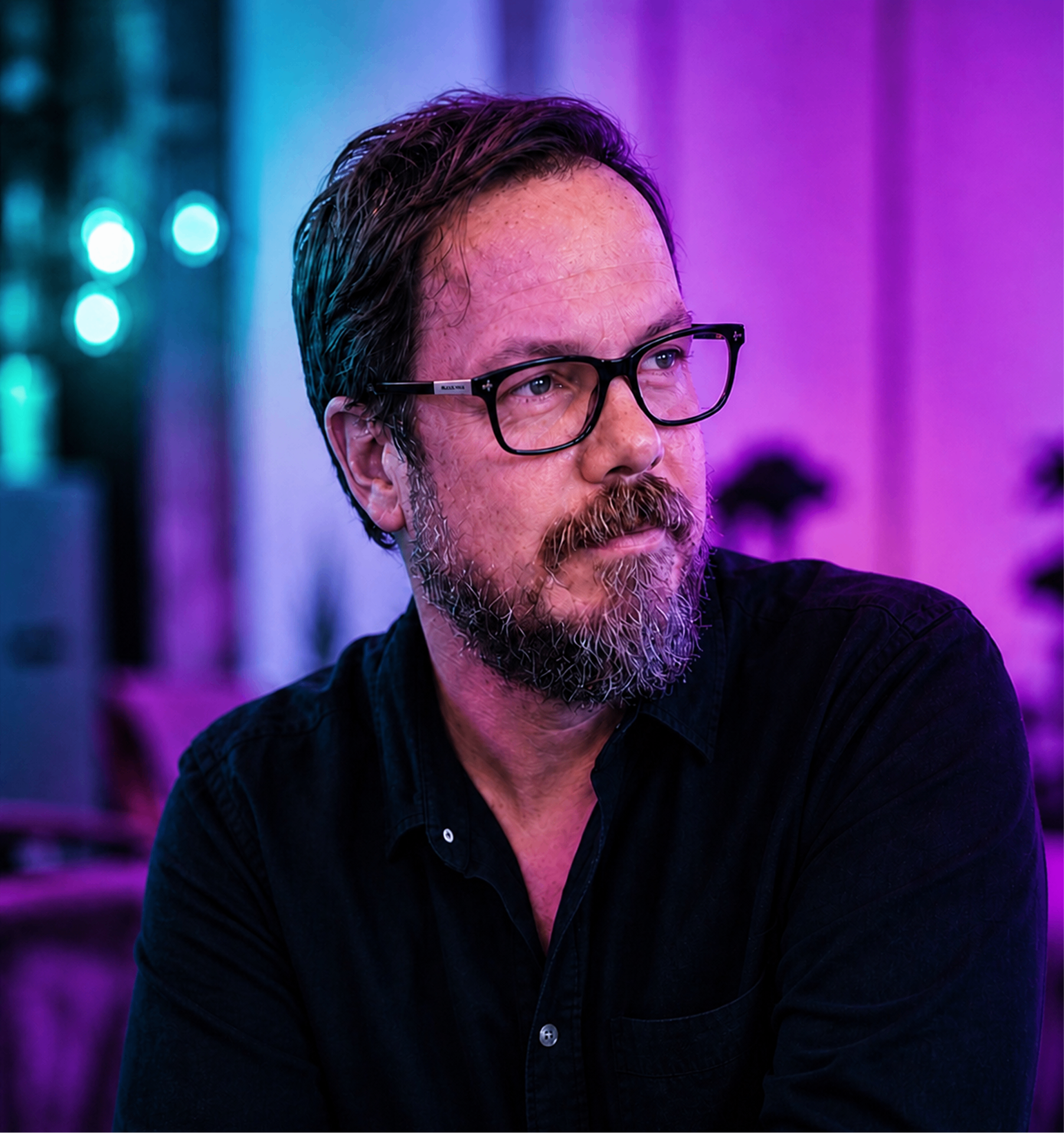 Host
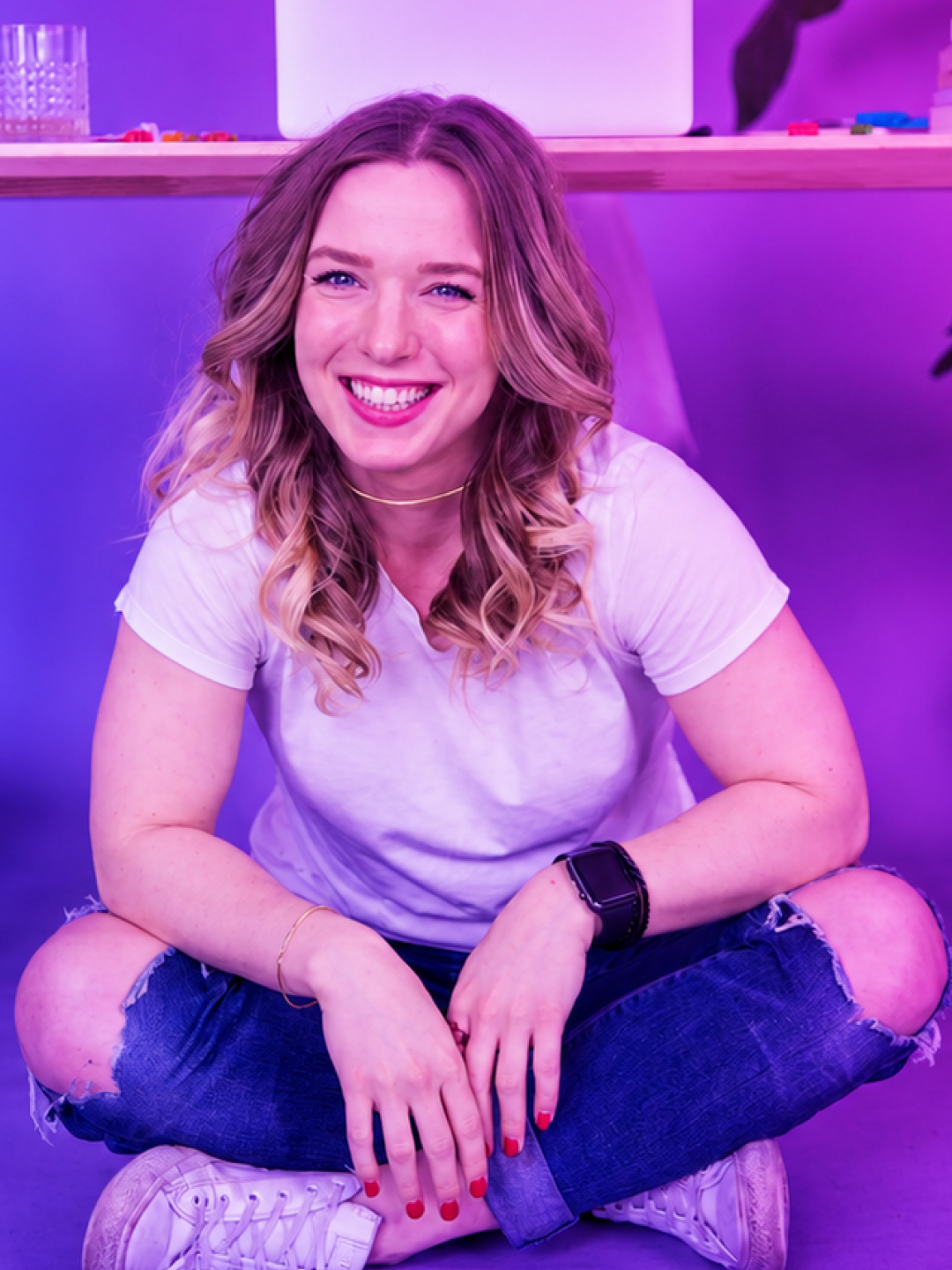 Guest