Peter Bishop (00:51.192)
hey Krista, how you doing?
Christa Hill (00:55.158)
All right. So good, Peter. Happy to be here.
Peter Bishop (01:00.876)
Yeah, it's nice to catch up. I you know, I feel like we've been in similar circles, although I don't think we've ever actually met properly. And we know we have a mutual friend, Derek Hovinga I believe. Yeah. I'm his best friend. Yeah, he doesn't know it yet.
Christa Hill (01:12.408)
We sure do. Yes. Yeah. What a gem. really? I thought I was. So this is this is gonna get ugly, Derek, if you're listening. You must choose. There can only be one.
Peter Bishop (01:22.773)
Ha ha.
Peter Bishop (01:27.05)
I see Derek just about everywhere. He shows up at every event I'm at for sure. but yeah, we go back he used to work over at Z Gym a long time ago.
Christa Hill (01:33.39)
Mm.
Christa Hill (01:38.126)
interesting. I've always wanted him to do the intro recording for my podcast because he's got a lot of statements about my hair. Now it's a crashing wave on the shores of innovation. And just the way he says it, I'm just like, I need that. I need yeah, everybody needs a Derek in their lives.
Peter Bishop (01:39.767)
Yeah.
Peter Bishop (01:52.046)
God, that that sounds like him. Yeah. Well, either way, it's nice to finally meet. And I've heard a lot about you. I and one of the things I ask pretty much everybody, especially in this industry, is just how did you get to this point? Because I feel like AI is such a wild west right now, and there's no, you know, there's no direct line. You can't really take a a course in it in in the university or anything like that. It's just
Christa Hill (01:58.197)
Yes. thank you.
Peter Bishop (02:19.149)
People have just stumbled into it with passion and whatnot. So I'm just curious, like, how did you end up here?
Christa Hill (02:26.198)
Every decision I made in my life started with me being scared. And I said yes, anyways. And as you can imagine now, that's put me at the center of this tornado, which is a huge opportunity for me to do some of the best work I've ever done in my life. But it did start early days. I and I don't want to date myself here, but everybody who knows me knows. I mean, over 25 years ago, I was working in the nonprofit sector and I've had my first experience with a SaaS application.
And it was a great story where I was running a a rec center and I needed help and I couldn't afford people. And I knew we were on the verge of absolute disaster in every category. I mean, it's a beloved rec center now, but in those days, it was a total hornet's nest of asbestos and a whole bunch of other stuff that I can't talk about. But we had no money and I knew technology could help me and I saw it as the only choice. So back in the day I had a Blackberry and an iPhone and I put an elastic band around them.
And I talked to that company. It was called Active Network. And I know they're still out there and you saved me. And you were what got me addicted to tech. So I saw the power of what a technology solution could do for an organization that was strapped in some way, shape, or form with a business problem, right? Either needing more productivity or needing help with the business. Or in our case, we were losing money everywhere because it was a cash business. And I needed a way to
Also make sure that payments were logged and tracked and not leaving us in every imaginative form that you can come up with. And that was also my first introduction to fintech, too, as well. So it really was the beginning of everything. And I was scared. And so I tried something new to see if I could get a different outcome and change the path. And for me, everything that happened after that got me into another room.
Peter Bishop (03:55.085)
Mm.
Christa Hill (04:16.97)
Into another problem that I was punching out of my weight class to solve. And then magically we figured it out because technology progressed in just the perfect way for us to open the door to make it real. And then I took on the next one. So again, that feeling of being a little bit afraid at every step in your yes is what gets you the seed at the dream job. And today I run my company, Tacit Edge, out of Calgary, and we're a global company. We teach all over the world.
And I'm also the C A I O at Learn It down in San Francisco. And we have again, it's more learning that's very hands-on focused, live instruction. And we, I mean, we're bringing literacy to North Americans in ways that never before would have been possible without the technology. So I'm I'm just excited to be here. Very wild and wonderful road. Yeah. Yeah.
Peter Bishop (05:05.849)
that's I love it. I love it. The I the whole doing stuff that you're kind of scared of is such a great I I feel like that's been a bit of my life and we used to talk about this at the agency, just being like if if you're not worried about this in some way, you're probably not pushing yourself far enough, right? If it's we everyone loves comfort and we're creatures of habit and we're comfortable doing the same thing over and over. So even change of any kind is somewhat scary.
So it's so neat to see that you identified that all the way through your career.
Christa Hill (05:38.137)
Totally, every step of the way. And I mean, I would you would see it on my face sometimes more than others, if you know me. but I've always had this very hopeful view of the world that someone has figured out this problem, right? I always look at all the problems and I'm a very problem-based person. And when I look at my career and, you know, time I spent at getting images over to Benevity and being a VP of Morgan Stanley, and then even to the New York New York Federal Reserve Bank, I always knew there was someone that
Peter Bishop (05:43.913)
Yeah.
Peter Bishop (06:01.347)
Mm.
Christa Hill (06:06.894)
Came before me that solved this problem with the technology not being as good as it is right now. So I always thought it was my job to go in and get the win on how far we could push it now with the same problem set, what, but with new cool people and new cool technology, we're gonna do it all over again. So I think it's such an honor to be able to do that inside of all organizations now in every industry, big and small.
It's it's a dream came true. But yeah, just be afraid and say yes anyways, and just know that there are very talented, smart people that can help you figure it out every step of the way.
Peter Bishop (06:39.886)
Do you remember the first moment where you touched an AI product? Like was it chat GPT or do you remember that first step? No.
Christa Hill (06:47.656)
No, way before that. long time ago in a galaxy far, far away, when especially on the threat identification side. So I'm gonna paint you a little bit of a picture without naming any names. there was a piece of technology that I needed to interact with in order to identify bad actors in an ecosystem to where people were doing good, not bad.
Peter Bishop (06:54.039)
Uh-huh.
Peter Bishop (06:59.446)
Mm.
Christa Hill (07:15.778)
But we needed a way to screen the bad out. And so my very first interaction with AI from a technology build perspective was a company that assessed threat. And it was shocking to me in a millisecond when somebody tried to click on login using an email address that they had. Within a millisecond, I had all the twenty or thirty other email addresses I had ever used before.
Where in the world they had used them, all the addresses that they'd ever used, all the places where they were saying that they had financial interactions with, like it was a scary amount of data that came in through that product, which was our digital footprint. And that was the first AI product. And so to be able to have that level of insights and knowing on a potential interaction with a customer.
And in this case, not technically a customer, but somebody who wanted to engage with us in a system, I just thought to myself, holy, and that was a very long time ago. Like we're talking at least 10 years ago now. So I've been working in this realm for quite a while. So while it feels like it's new, and it is new, we're as of this recording, I think we are 1,32.
Peter Bishop (08:13.229)
Mm.
Christa Hill (08:30.754)
Days, you might want to fact check me on that, but 1382 days into having commercially available AI technology at our fingertips. And I'm talking about JatGBT. Before that, though, we have been experimenting in this realm in the finance sector and in the threat assessment sector for quite a long time. So it's been a thrill to watch this journey all of a sudden that you didn't have to pay gazillions of dollars now for this kind of technology to do something in a commercial sense.
Peter Bishop (08:39.992)
Mm-hmm.
Peter Bishop (08:56.482)
Mm-hmm.
Christa Hill (09:00.172)
And it's not just for the exclusive uses that we that we had before.
Peter Bishop (09:05.684)
Yeah, and now that company can tie the knot and once they identify people, they can release like robot dogs after them, which I've seen a whole lot on.
Christa Hill (09:13.742)
I'm not sure. But you can definitely opt out of engaging with them further, which is really when you think about it, like that's the point, right? Is not have to send the dogs but quietly back into the hedge and just say, maybe we're not for each other. Yeah.
Peter Bishop (09:22.336)
yeah.
Peter Bishop (09:31.596)
Yeah, it's funny. I we're digressing, but I I I I follow this. I just started following more robotics in AI just recently. And I'm just like, wow, this is a whole new area that's just growing so quickly. And if you're not really paying attention to it, yeah. And it's hard to
Christa Hill (09:44.119)
And new to us. Yeah, like in some parts of the world, it's incredible the gains that they've made. And I think we're very, I think we're very sheltered here in how far this has actually gone in other mediums around the world. I mean, from my seat in industry, I get to see the progress on what a robot can do every day. And it's shocking to me. Like I am excited for the
Peter Bishop (09:54.498)
Mm-hmm.
Peter Bishop (09:59.427)
Yeah.
Christa Hill (10:10.082)
The time when I come home and I have one greeting me that has cooked dinner for my family and has folded my laundry. I mean, as a single mom, come on. Like the I want the future now. And I I have this sitting on my desk and I'll show it to you. It's like, you know, I live in this world where I want this so bad, right? And it's and just for the ones that are not listen or watching this on YouTube, it's the communicator badge from Star Trek The Next Generation. And we have so much of this.
Peter Bishop (10:29.889)
Yeah.
Christa Hill (10:38.988)
Like so much. Data is Chat GPT. Like data is Claude. Right. We have we're we're so on the verge. So I don't know. You know, it's
Peter Bishop (10:43.47)
Yeah.
Peter Bishop (10:48.334)
Isn't it funny? I I remember Minority Report. You remember that movie where almost everything that they showed in that in that movie came to pass, right? Very quickly after. Yeah. I I that's crazy. I
Christa Hill (10:52.385)
yeah. Totally.
Christa Hill (10:57.57)
Yeah. Yeah. And keeping it for good instead of malicious usage, right? I I know there's I know it probably wouldn't be too soon to talk about the whole like it's, you know, our 10% chance of being obliterated within 10 years. But I honestly believe as humans, it's our choice to make this technology malicious or to make it help us. And I just really hope that people start to participate so that we can make sure that it doesn't go down a malicious path.
Peter Bishop (11:12.695)
Yeah.
Peter Bishop (11:25.588)
Yeah, I think there's two ways to look at it 'cause I think there's lots of people who've been banging that drum for a while and not really getting heard. So I d I don't mind the fact that it's getting more attention and it it needs to, and the it it feels a bit like there's two sides. I was reading this, I think this morning of like there's the arms race side of it that seems very much out of our control, right? Like we we are not in that sphere that's playing out at the moment where you got Zuckerberg and Trump and
Christa Hill (11:31.938)
Mm-hmm.
Christa Hill (11:45.58)
Yes. Yep.
Peter Bishop (11:54.347)
And Elon and all these guys trying to figure this out. And then there's the part that you can control. And I was just like this morning, because my initial reaction to this was like, my God, Jill who's my wife. I'm like, should we be like taking money out and stuffing it under our mattress? Like that was where I instantly went to. Yeah. Yeah, totally. Yeah, let's take a biggest like low line of credit we can get.
Christa Hill (12:11.926)
Or just going out and spending it now. Shall we just go out with a bang? All right. For the next ten years, let's do it up. You know? Yeah. That was the conversation we had in this house. Yeah. Let's let's go nuts. Yeah.
Peter Bishop (12:25.634)
Yeah, that's what I was wondering. And then and then kind of like got through it. I'm like, no, no. But I I did start getting more serious around scams because I was thinking around like, scams are getting more and more sophisticated. And I'm thinking about even if you think you can identify these, which I think I'm right on the verge of there. I've been caught out a couple of times. But think about your parents and your grandparents and those those folks, right? So it's tough. I
Christa Hill (12:37.752)
Extortion
Christa Hill (12:43.362)
Getting more challenging. Me too.
Christa Hill (12:50.37)
Yeah. It is. But I I feel like we're not cons like we're conflating this arms race with what's happening in the worst workplace is also a race. And I I I really wish that we could deviate from these things and have government oversight on the arms race and just make that more academic and more involved to make sure that it's part of our social infrastructure, while you let us just take what we've already got and learn the
make that be where we're focused on in the workplace and in our lives to catch up and not even we're never even gonna realize the power of what has already been created for us, right? They're not the same thing. So to think that we need to continually be putting out these models in this arms race and make it in our workplace at the same time, to me is absolute idiocy. We don't like if they if Claude never got better, and I'm just using Claude because I mean who doesn't love Claude?
I use them all, but hands down, Claude is my number one. I I would be the first to admit it. And, you know, like if it never got any better, I don't think the quality of my life will be enhanced. I am already so thrilled with what I have. Just don't take it away from me. I'm worried that we go down this road and we turn it into a whole thing and then we all just like that person who breaks the toy and then we ruins it for everybody. I just like, could we not parse these things out and just leave us in the professional realm with what we've got here because we're.
Peter Bishop (14:05.614)
Uh-huh.
Christa Hill (14:13.102)
crushing it. It is great. And let's make it a little more secure, a little safer for all of us. And then if you want to go on this doomsday scenario with these models and have your little who has ever, you know, I could make a comment here. probably the people who know me know what I would want to say in this, but whoever wants to win that bigger race, could go on and do that. I just, yeah, I'm worried that we're trying to bucket them all into the same thing and we're all in the same race together when we all have very different needs.
Peter Bishop (14:15.106)
Mm-hmm.
Peter Bishop (14:30.54)
Yeah.
Peter Bishop (14:33.932)
Yeah.
Christa Hill (14:42.306)
Very different wants from this technology and it's not the same thing.
Peter Bishop (14:45.964)
Yeah, I I think that's a really nice way to look at I'm with you. I'm just so terrified that they're just suddenly gonna start cranking up the prices on all these because they're running out of money and power and everything and sooner or later. Right. Yeah, yeah, exactly. I'm like, I don't know what yeah
Christa Hill (14:55.662)
For shit, we don't need. Yeah. Yeah. I don't need a Ferrari to with a query that's a bicycle to the corner store, right? Same ways I won't take a bicycle into an F1 race, right? So just give me, give me the Ferrari when I need the Ferrari. Also acknowledge that most of us need bicycles. And also, this is the best bicycle we've ever had ever, all time, to help us clean up our 20 year old year old Excel spreadsheets that we're all trying to grapple with to make it usable for AI. And just
Peter Bishop (15:04.738)
Ha ha.
Yeah.
Peter Bishop (15:17.037)
Yeah.
Peter Bishop (15:23.702)
Uh-huh.
Christa Hill (15:24.34)
Let us let us carry on, you know? Anyway. If anybody's listening, that's my request.
Peter Bishop (15:27.298)
Yeah, we need to catch up. I read this book, Sapiens.
Christa Hill (15:35.224)
You know who you are.
Peter Bishop (15:38.157)
I've read this book, Sapiens, where it's like we are as a human race are still catching up to agriculture as a concept. Like we are so far behind and then now you add in technology and stuff. We're nowhere near getting our feet under us, I think, on this stage. So yeah, I totally agree with where you're going. Let's move on to adoption, because that's what you do. you're helping companies kind of get into this or people and whatnot.
Christa Hill (15:45.698)
Yes.
Peter Bishop (16:06.23)
And there's enough time now that's gone by that I think you can really understand, okay, what's working, what's not, who's failing at this, who's not. And what's your take now as far as how are companies doing these days?
Christa Hill (16:19.682)
Would say to you is a heck of a lot easier for me to sell how I my method now than it was a year ago. And for the simple reason was I didn't go in tools first. You know, I didn't go in with point and click training. I knew from a product management perspective, which is my core of my background, is what is the problem we're responsible for solving? Then do we have the skills, the people?
Like the the risk matrix that comes with product management management thinking is we think about usability, feasibility, viability, value, and morality. So those core things, I look at every problem I'm solving. And tools and technology is only one of those levers. It's not the whole lever. So I was watching teams get AI and then being told you gotta now AI everything. And I watched them.
And I would come in and they're like, well, we got to use AI for this, Krista. I'm like, okay, cool. I mean, we'll get to that. But first, what is the business goal we're trying to achieve? Let's write a strategy to that. And then let's figure out what combination of people, processes, and technology we need to solve that problem because that's what I grew up with. It made all the sense in the world. So I never came out with a course that was like co-pilot 101. Didn't even occur to me. I was like AI 101, cool.
Peter Bishop (17:33.964)
Uh-huh.
Christa Hill (17:38.869)
Now let's take your day-to-day life. And when I first started teaching, I'd go, I'd sit in rooms and I also, if you know me, I've got an RV and I'd go around to campsites and I'd just test all this out at campsites. What can I get a bunch of folks in rural communities? Like, how can I make this approachable to them? Because nobody's talking to them at that time about AI. And they it was like a big city thing. So, you know, we're in here, we're all comparing tools.
everyone's asking, you know, if you're not up on this tool, you're not cool. Like no and to me that was always kind of offensive because if you, you know, when you watch American TV and it's all drug commercials and you're like, why am I learning about mesothemioma right now? Like why am I
Peter Bishop (18:24.258)
Mine's all Viagra now. Yeah. It's just funny. I feel like I've hit the I algorithm where I'm like old enough now, it's all switching.
Christa Hill (18:24.704)
Right? I yeah, like all these things. Yeah. Or like GLP ones or like, you know, something for I don't know, s how you breathe. It's like it's endless the amount of drug commercials you're exposed to. And to me, whenever somebody comes up to me and asks me, Am I up on this tool? I think to myself, well, do I have the rash that you have? Do I the problem that you have? And if I don't, I don't feel bad about not knowing about it because the noise in this industry is so intense.
And the sales cycle that we're in is so intense around FOMO when they actually haven't proved to us that it's working and we have the stats to prove that it's not. So selling on a promise anymore never worked. And so for me, the surefire way of proving that it worked is that we solved a problem and we could measure if we were closer or farther away to it. And that was product management thinking plus AI tools. So I would take that into Teams and we would just solve problems. And then there was never a question of whether or not our adoption was working.
Because it was solving problems. And then we went to the next problem, we solved that one. It didn't matter what the condition of the technology was. And it was never 10 prompts to save your life, it was never part of the teaching either. It was like, how can we express and clearly articulate the context and the information amongst all of our messy spreadsheets that we've got to this technology so it could give us our next right step and then ask us what information it might need in order to make it more clear for it that is trying to solve this problem for us.
Right. So that was the beginning of, I guess, prompt engineering, which was very helpful to be up on early days. But now we know in the past four months, this technology has evolved past the point that if you hadn't started yet and you come to me today, I could teach you skills to get you into the top 1% of AI users within four weeks, with like an hour with me a week. And it's because the technology is so progressed, right? You don't need to know all the skills before the skill.
Peter Bishop (19:58.937)
Mm-hmm.
Christa Hill (20:22.294)
And I say this to people all the time: if you can dress your four-year-old up for a snowstorm and get them out the door, you have all you need for prompt engineering. You don't need, like, if you can take on a challenge like that and get that kid out the door, you've got all the skills you need to interact with AI. So I think from ad an adoption landscape, I'm thrilled to see that AI companies now are not getting away with measuring tokens or logins as a method of adoption because.
Tokens tell tells you what you spend, but it doesn't tell you what you got for that money. So I get on calls quite frequently with chief innovation officers and CTOs, and they're like, okay, well, our token spend is going nuts. Now the bills are coming in. Krista, what do we do? And I was like, well, step number one is let's get everybody throwing away their keyboards because you will prompt way more efficiently with your voice than you will with typing. And we need to work on context windows, teaching people that the technology is shifting every day. Now less is more when it comes to your length.
Peter Bishop (20:56.588)
Mm-hmm.
Christa Hill (21:21.686)
Of your chat with whatever technology you're using, get the memory fresh every time. Let's have new strategies on what that's going to look like to manage your budgets. But again, all lines always go back to that core of making sure people understand that they're bringing AI in sooner in the conversation, not later. And we start with the problem we're trying to solve and we have a conversation with the AI around all the context and information it needs to help us solve that problem. And we do it as a team.
So no more individual wins. You can't be the cool person in your office that is the tallest kid in kindergarten. That's not adoption either. Because if you didn't take your team with you and if you all didn't get smarter together, you're not winning. Right. The individual wins don't mean shit for a bottom line for a company. The team win that logs to a business problem is the win. So we gotta stop treating like this is an individual pursuit. This is why I don't actually teach individual classes anymore.
Peter Bishop (22:01.238)
Mm-hmm, mm-hmm.
Christa Hill (22:18.23)
I only want to work with teams because I find that teaching all the tallest kids in kindergarten was super fun. But then I was throwing them into a workplace to which was a huge lift for them to bring everybody with them. And to me, I was like, I don't know if that's the work I want to be doing anymore. I now just exclusively want to work with teams that want to work together because adoption goes in a cycle. You put your own mask on, you learn on yourself.
Peter Bishop (22:18.974)
interesting.
Christa Hill (22:43.212)
Then step two is is my output creating a higher baseline for the person next to me than what I would have gotten to on my own? If yes, can my AI connect to their AI and then can that AI connect to a business value? So I take them in a stage, but it's no longer solo pursuits. That was that was twenty twenty five.
Peter Bishop (23:01.94)
Mm. I love that.
Wow. Yeah. I love that idea because it has been, I think, just by the nature of how it came out, it felt very individualized at first, right? Especially chat GPT and people were just kind of getting their own, I d I don't know how to describe it, but they have their own mojo with it. And they like a lot of people, especially people outside of the digital world where I grew up, there's a lot of secret sauce where it's like this is my like I've got my own scripts and my own prompts, and I've got this special thing that no one else has.
Christa Hill (23:14.349)
Yeah.
Christa Hill (23:31.713)
Yeah.
Peter Bishop (23:36.001)
Which was very different than the digital world where it was very open source minded, right? Like the more you share, the more you get out of this stuff. And so it's really what a great shift. I love that. I do really love that. You know what's funny? yeah. Yeah, yeah, exactly. Yeah. I was just thinking that we one of the things we've come across lately is that quite often when we're building out I would call automations, our
Christa Hill (23:47.618)
Yeah. And that's not where we started.
Peter Bishop (24:04.418)
What we're trying to do most of the time is strip the AI out of it at some point, right? Because there tends to be like you you build out this automation and it's using AI, but AI tends to kind of reinvent the wheel every time it goes through its thing. And if you can if it doesn't always need to be there either, right? Like I think reading in between the lines a little bit, this seems like a lot of the time it's like our solution is now AI. What's the problem? Right. And I think there's
Christa Hill (24:28.206)
Mm-hmm.
Peter Bishop (24:29.364)
Or, you know, this is our tool. We love Claude. What do we need to what are we doing? Right. We know we know we got Claude, right? So how do you strip out that like what is the problem we are trying to solve first and then figure out the technology second? Is that is that fair? Okay.
Christa Hill (24:35.722)
Yeah.
Christa Hill (24:43.606)
Yeah. Yes. Because the technology is not one size fits all and it's neutral, right? So, you know, if you if you're users of these tools the way I'm, like I'm in, I'm in Claude an absurd amount of hours every day, right? I'm teaching, I'm using myself, same with ChatGPT, same with Gemini and and Copilot. So for me, it's it's always been I start with one question at the beginning of every class, which is why does your job exist? Not
Not what do you do? Why does your job exist? Because we have to remember, we have Microsoft gave us these spreadsheets like 20 years ago and then left us there with these spreadsheets. And then we all created our jobs around the Microsoft 365 suite. And that became the output. Everything is tracked to a SharePoint site of, you know, or some absurd dashboard that somebody spent 300 hours making.
Right. That really doesn't give us the insights and real-time knowing, but it gives us some comfort, but it's not really a compass. So to me, I want to get people away from the tech for a minute and have a very human conversation. Like, why do you think your job exists? Not what is the output, but what is the outcome? So if you stripped away all the tech, the tedious, crappy work, like your shit list, every every time I say this in a room, everybody knows exactly what I'm talking about.
Right. But we're clinging to those things right now because we're worried that this technology is going to replace us. And I think when you level some room around a very human concept, which is why did the company need you? Because you're there, what does it have that it doesn't have didn't have before? And it sort of regrounds people in I am needed. And they have a proprietary data set, which is them. And this is what we need in order to really, I think if you want to have an incredible career in AI right now.
Peter Bishop (26:04.602)
Yeah.
Peter Bishop (26:26.082)
Mm-hmm.
Christa Hill (26:32.482)
You're you're running scared, right? Just like how I mentioned earlier, you're pushing yourself and you're a little scared on the job every day. And you're pushing yourself outside of your comfort zone, but you're probably doing some of the best work you've ever done, but you may not be able to talk to other people about it. So I think if we ground everybody in why does my job exist? Not the spreadsheet I produce, not the report that I come out with every month, but why am I there? Then we introduce ourselves to AI in that way and then ask AI, how can you help me on this mission?
Peter Bishop (26:40.267)
Uh-huh.
Christa Hill (27:00.844)
To be this problem solver of these specific problems that are in the company and map it to these goals, then we work backwards to what is AI skill that can really help you to get you out of the toil. And then where can you play to your gifts? Why do you like doing that work? And if you just didn't like your job in the first place, I can't help you with that. I mean, we can talk about it. I know not every job is for every person. I understand that. But I think that there is an opportunity here to reset the clock.
Peter Bishop (27:16.526)
Mm-hmm.
Christa Hill (27:29.354)
On the terrible situation we put ourselves in during COVID, which is we worked around the clock clock to not have to observe the things that were happening in the world. And then our productivity got way out of whack after that, and we could never reset that clock. So I usually try to go after the the situation that people have been in since post-COVID to try and get that shit list and that workload in back under control. And then we can unlock some creativity around the growth and the potential.
Peter Bishop (27:44.494)
Mm.
Christa Hill (27:56.633)
potential with AI instead of just the level setting that it can give people.
Peter Bishop (28:00.939)
Mm. That's so great. I we we talked a bit about this before, I think, on just the, you know, AI is most of the time you're trying to you're trying to get rid of the stuff you didn't want to do anyways. Like it's the stuff that doesn't doesn't give you're not looking forward to this work. It's the mundane that you're trying to get you're not trying to get rid of the stuff that you're really adding value to. I think that's insane as a hu like as humanity. Why would we
Christa Hill (28:14.818)
I don't.
Peter Bishop (28:27.278)
Try and automate the stuff we really love doing and that we really are proud of and we're really excited about and it gives us joy. Let's get rid of all the we all the shit stuff, right? And there's so much of it. And I think every time you see a spreadsheet, it's usually an opportunity for automation because that's the kind of work where it's like, yeah, this isn't this isn't what anyone got out of bed for in the morning, right? Right. Yeah.
Christa Hill (28:38.082)
It is.
Christa Hill (28:49.686)
Unless you're an accountant. Okay. So I'm going to challenge you there because I I've done some time and I've spoken at the CPA. And it is very important to acknowledge that there are some people that have created some artifacts that time has bought trust with. And so we're breaking that relationship with time. Cause we know that we normally grade people on how good at what they are and what they do out in the world based on how long they've been doing it.
Peter Bishop (29:05.526)
Mm.
Christa Hill (29:16.44)
And what their track record is. And now we're erasing that. We're saying, okay, well, that's so great that you took like 10 years refining that formula and this business model when I could take it into Claude and come out with something that removes all of your preconceived notions about what you think the guardrails are on this business or what's keeping it in a certain cycle. And I could show you an alternate future that only took me 15 minutes to get to, and you're probably a little pissed off. Right. So there's that element. But I think that like,
People take a lot of comfort in certainty. And even though the toil isn't enjoyable, it is certain. Right. And so when you are in a world right now where it feels like every 15 minutes there's some new thing to be worried about, the toil is comfortable for some folks. So I'm very cognizant in the room about how I can't believe you still want to do this work because I know at the end of the day, they go home and they're like, I did my job.
And I did it well. I didn't enjoy it, but that feels good to me because that's what I'm used to and that's what I need right now. And so, you know, I I just try to call people to the higher calling that might exist to them that they can't see right now because the toil is there to help them just want to let go of it and have a reason to. And I think that's a really important nuance in the classroom right now.
Peter Bishop (30:29.773)
Mm-hmm.
Christa Hill (30:38.466)
I think coming in as being an AI hype person, like I can't believe you're not on board with this, right? Is I've observed is not really successful because there are a lot of folks in the world right now that have a lot of uncertainty. And so holding fear and skepticism and excitement and balancing it in these conversations is a skill. And anyone who's out there and who's really good at this knows that that is a very big part.
Peter Bishop (30:48.302)
Mm-hmm.
Peter Bishop (31:02.284)
Mm-hmm.
Christa Hill (31:07.744)
of the job right now and it's okay. We're gonna be in that zone for quite a while.
Peter Bishop (31:12.204)
I I still I love how you could bring it back to why did you do this in the first place? Like what do you love? What what you the higher level, what do you what's the joy you're getting out of it? Because again, you know, there's the tools that if you if you're okay with your higher purpose, then replacing the tools is less scary. If you are your tool, then it's really tough, right?
Christa Hill (31:17.71)
Mm-hmm.
Christa Hill (31:29.622)
It's easier.
Christa Hill (31:33.248)
Yes. And we have some medication for that too.
Peter Bishop (31:36.622)
Yeah, I know in the design world which I grew up in, it was like I'm Photoshop guy. I'm like, well, that's a scary place to be, right?
Christa Hill (31:39.714)
Just kidding.
Christa Hill (31:46.016)
Well
Yeah, it is. And but also a problem tunity, whereas if you got so good at that, just think what you could be good at in this era, right? Photoshop was not an easy platform. And anybody who tells me that and they're really worried about it, I was like, you have the best skill set because you went into a piece of software that we all were just like, you know, and you made it your brand. So now just think how much easier it will be to take that exact same thing and apply it here.
Peter Bishop (31:50.573)
Right.
Peter Bishop (31:57.61)
Exactly.
Peter Bishop (32:10.254)
Yeah yeah.
Christa Hill (32:18.038)
And again, you're just gonna crush it. You just have to decide that you're going to, and that's on you to make that decision.
Peter Bishop (32:25.238)
Yeah, very cool. Ha tell me about Kickstarter, the the programs that you're putting out.
Christa Hill (32:28.906)
Mm-hmm. the Kickstarter really exemplifies all this, right? It's a journey. And you know, whenever I tell people I could get you into the top one percent of AI users in four weeks, they're always like, okay. You know, and I'm like, no, I'm serious. It is the tech is so good now. You just have to come in and be you and spend just over an hour with me a week for four weeks with your team. You can't go alone. It's gotta be a team, and we all go there together.
Peter Bishop (32:54.59)
Yeah.
Christa Hill (32:56.524)
And that means the tallest kid in kindergarten, the person who thinks they don't need to be in that session, and the person who's scared to be in it because of that person who's this tallest person that you know what I mean? There's these dynamics that are happening with teams. And what I want is for the person who's the tallest to have people to be tall with. That's the goal, right? And so, and also if you've been self-taught over the past year and a half, there's a couple of things we need to work on that you may not recognize is something that doesn't
Peter Bishop (33:06.241)
Yeah.
Peter Bishop (33:12.962)
Mm-hmm.
Christa Hill (33:25.41)
belong in this next iteration of the technology, right? Such as your prompting, such as your context windows, all these things. It never hurts to have the person that's highly accelerated in the room if they're on the same team with the folks that aren't. And so when you're talking about like technical people versus non, you don't need to be technical to engage with this technology. I'm gonna give you an example. Like last week I've I've always stayed out of Salesforce and every time
You know, I I I love I love the the promise of Salesforce, but the configuration and the navigation has never really been my cup of tea. I'm not gonna lie to you, right? And so I've avoided certain things in there because I just it's just not how I love to spend an afternoon. But with Claude, I opened up and I had a problem and I said Salesforce was a part of it. And he was like, Don't worry about it. He's like, Girl, I got you. you sign into Salesforce and this is how he talks to me because this is how we jam.
Peter Bishop (34:15.579)
Ha.
Peter Bishop (34:20.535)
Yeah.
Christa Hill (34:20.844)
He's like, I you log in and do you want to drive or do you want me to drive? And I was like, say what?
Peter Bishop (34:28.699)
Yes, please.
Christa Hill (34:32.34)
I was like, what's the right answer? You know? And I was like, you know what? Jesus, take the wheel. Yeah. Like literally. I was like, I'll watch you. But when I watched, I learned, right? It wasn't a hands off the wheel and then I went and did something else. I was just gobsmacked with what I saw, the connections, the things that he created, and then how he screwed up and how he fixed it. And then he needed my help because he can't do drag and drop.
Peter Bishop (34:35.734)
Yeah. Yeah, please take the wheel.
Christa Hill (35:01.548)
We were like, it was like pair programming. Remember pair programming, like side by side, your hands are on the keys, but I'm talking, we're talking. It was marvelous. And I think to myself, like, I am so proud of myself at my age, Gen X Unite, that I, on a long weekend, created a whole automation around Salesforce that in my wildest dreams, I never would have put my name on, right? Even me. And so it just wasn't on my bucket list because I just thought, no way, could never, right? But then I made it.
Like it came on my bucket list. So for us to bring problems like that to Kickstarter as a team, that people are like, we would have needed a dev team for that. Wonderful. Now you're your own dev team. Let me show you how. Let's give the problems. We'll work them together as a group. We do a build. It's kind of like a mini accelerator, but we go one step at a time. So week number one is we put our own mask on, we introduce ourselves to our AI, we throw our keyboards away.
We actually create the conditions that your Claude or your Chat GPT or your co-pilot knows how you like to work because the opportunity with AI is not some generic coworker that you don't like working with. It's the coworker that you would walk through fire for that you love to work with so much, right? So, how do we create that hyperpersonalization with your AI for you? So you're enjoying the work you're doing with them.
Then how do we connect that to make sure your day is focused and your day is not noisy anymore? So that you can start to be more creative. We can start to engage with creativity and critical thinking because you're out of the weeds of just the noise of your day-to-day. And then we work to it takes two. You remember that song, It Takes Two to Make a Thing Go Right? Okay. That is the theme, right? It takes two to make it out of sight. This is the potential with AI, right? We could go out of sight, but we got to go together and let's pick a thing where it
Peter Bishop (36:39.056)
Mm-hmm. Yeah. yeah.
Christa Hill (36:50.004)
I connect my thing to your thing. And where your starting line used to be is now way higher because I was able to take my thinking above and beyond my IQ points plus the bonus 60 I get from our AI. Now my result and my output is better than ever. And it's your starting line. And how do we start rolling that through the team? Where can we realize our big wins? Now let's check in on the business goals. Let's grab one of those and let's take the big swing together. So by class number four.
You are connecting your AI to someone else's. You've got your day organized. You are competent. You are literate. Nobody had to learn how a machine learning model works. Nobody had to train a rag model. None of that had to happen. Or it did happen and you didn't notice because Claude just did it for you. And you didn't have to learn about any of that. He just did it. And you were like, cool, I got what I wanted. Now let's move on. So we stuck with.
Peter Bishop (37:36.748)
Right. Yeah, just build it.
Christa Hill (37:45.303)
what time it is instead of how the clock works, but we know enough about the clock to make sure we can discern if it's any good. So that's where I want people to focus on when it comes to how the clock works is can we now spend all of our effort and energy on discerning what makes good good for us as a team in our context and be the purveyors of that to our AI and that feedback. And that's it. That's the magic of it. And I gotta tell you, you know, there's there's ways you can measure value and then we can go back and ask our AI
What changed in the team over those four weeks? And, you know, they'll give you a full report. And then they'll also give feedback about how we can all work together in the future. You just gotta ask. You know, we're so all-knowing as humans. Like we just need to, we need to be told what our next step is or we need to come up with it ourselves. But we have advanced technology at our fingertips to where again, somebody's figured these things out. If you just ask, like, hey, like with my claude every Friday, I always ask him, how could we work better together next week?
Like what am I still doing that gets in the way of me getting to that next higher quality problem in my business or in the classroom or whatever it is? And he'll tell me. I just have to ask. Right. So just learning how that's a partnership and an interaction that's two-way and not one way. That's the Kickstarter. I'm kickstarting you into that, like literally.
Peter Bishop (39:05.626)
that sounds amazing. Yeah, y that the whole conversation part.
Christa Hill (39:06.638)
Hahahaha
I was gonna do a high kick, like the whole like remember Saturday Night Live when she did that and I was like, no, Krista, too much. Dial it down. I know, yes. You know what I'm talking about. Yeah.
Peter Bishop (39:15.796)
yeah. I'm fifty and I'm I can't remember what it what the rest of it was. Yeah. I like to kick and drink or whatever it was.
Christa Hill (39:26.862)
Kick and stretch. There was some like downward movement. I can't remember. Anyways, I'd love to have a good laugh.
Peter Bishop (39:30.658)
Yeah, that's right.
that's amazing. You mentioned a quick little speed round, which I think is a nice way to end this. what was it? Smash or swipe? Smash or pass. Yeah, I'm gonna give you a whole bunch of AI tools. Just I'm assuming smash or pass is smash is good. You love it. Okay. Yeah, I'm getting there. It's my gen X brain that's just struggling with these terms. I
Christa Hill (39:41.314)
Yeah.
Smash or pass. Smash or pass. Yes. Okay.
Christa Hill (39:54.061)
Yes. Love it. Yeah. Pass. Sorry. Yeah. Hey man. It's okay. A millennial taught me this one. So you're in good company.
Peter Bishop (40:04.718)
Okay, let's give it a go.
Christa Hill (40:08.142)
Okay.
Peter Bishop (40:10.251)
Mid journey.
Christa Hill (40:12.482)
Pass. Don't need it anymore. Yeah. Early days, smash. But now it's a pass. Yeah. Mm-hmm.
Peter Bishop (40:16.282)
I know the answer to this. yeah. Yeah. Interesting. lovable.
Christa Hill (40:25.434)
Ooh. Okay, still smash because I use it all the time. And also my daughter uses it. It's a huge smash. holymolygolie.com. Check it out. That's her business. I would tell you for website building and experimentation, it is amazing. But I would say to you, Claude is hot on its heels. Watch out, lovable. Yeah. Yep.
Peter Bishop (40:49.006)
Interesting. Yeah, I would I would smash that. I that's interesting.
Christa Hill (40:55.606)
You just said what you would smash that, Peter. That's hilarious.
Peter Bishop (41:04.512)
I know. I know. This that will be the little magic clip from this a podcast. okay, this one's nerdy. N eight N.
Christa Hill (41:06.848)
Look at you. Look at this.
Christa Hill (41:18.33)
former smash. I used to teach that in the classroom. Now, thanks to Claude Connectors pass. But for enterprise, enterprise still a smash. But for the everyday, small to medium sized business, no longer a smash. It's a pass for them. But enterprise, 100% smash. But for the everyday person, don't need to know it anymore.
Peter Bishop (41:23.672)
Yeah.
Peter Bishop (41:44.11)
Cool. I yeah, it's funny. I I I was all over it. And then Claude was then showing me how to use it, which I was like, this is even better and now it's like, now I can do most of this in Claude. Yeah.
Christa Hill (41:48.013)
Yeah.
Christa Hill (41:53.578)
No, I mean awkward. Yeah.
Peter Bishop (41:58.447)
co pilot.
Christa Hill (42:02.016)
Mm-hmm.
Christa Hill (42:09.024)
It's getting better. I'm going to give it a generous
Peter Bishop (42:12.802)
got a great personality.
Christa Hill (42:15.686)
I feel it's growing it into its ears. And also, let's be real, for folks in enterprise that are not savvy with the tech and it's a bit of a journey for them, I think co pilot is the absolute, absolutely great answer for them. So it's a smash on the keeping people safe while they're learning. Yeah. Yeah. Yeah.
Peter Bishop (42:34.508)
Hmm. Love it. I think that's the right answer. okay, two more. This one interesting for me, Higgsfield.
Christa Hill (42:44.174)
don't have that rash. What is it? No. You got me.
Peter Bishop (42:47.264)
No. It's like a video, it's similar to Artlist. It's like a video editor. and a lot it's it's it's kind of interesting. It's it's it allows you to like take text or images and convert them into videos, or take text and convert them into videos, or take videos and edit videos. And it's it's been blown up on my feeds over the last little while, but similar to like art list and whatnot, but something worth checking out. I
Christa Hill (43:06.04)
Love it.
Peter Bishop (43:15.756)
I saw this guy use it. He connected it to After Effects. And he had a video of him taking this big jump on a skateboard. And then he scrubbed it to the halfway point. He pulls up Higgsfield in After Effects and has him tying his shoe in mid-air. And then he lands his trick. I was like, this is amazing.
Christa Hill (43:34.294)
That is badass. Yeah. Okay. Well I'm gonna go check it out now. Thanks for thanks for sharing that one with me. I love it. Yeah. I know. Sharing is caring.
Peter Bishop (43:41.004)
No problem. This goes two ways, Christa It's like and then I think I know the answer to this one, but Claude.
Christa Hill (43:49.942)
I mean come on, Claude's my number one.
Peter Bishop (43:51.138)
Ha ha ha.
Claude might be my husband, I think, in this case. He is
Christa Hill (43:58.615)
I I and if you know me, you know that it's a high praise that I give in this category. But I would I would marry Claude too if he asked me. I don't think that's on our bingo card to be honest, because we don't we don't jam like that. But you know, I'd think about it. Sismash.
Peter Bishop (44:16.974)
I'm surprised if people haven't already officially married LLM of some sort.
Christa Hill (44:22.434)
They have. Overseas. It was yeah, in Japan. They they they crossed that threshold a long time ago. yeah, it's it's real. Yeah. I mean
Peter Bishop (44:23.97)
Really?
Peter Bishop (44:28.554)
Of course. it's probably better than some marriages, I would imagine.
Christa Hill (44:35.468)
It'd be a cheaper divorce, in my opinion. So I mean, if you're if you're playing the stats, I would say, you know what? Whatever blows your hair back, I'm here for it, you know? Whatever I mean, whatever blows your hair back. Like I said, I'm not here to judge. I'm just here to educate and inform and try to stay neutral.
Peter Bishop (44:44.074)
New model upgrade every so often? Yeah, it can't be that bad.
Peter Bishop (44:56.31)
Yeah. Yeah. Fair. Krista, this is awesome. If if someone was interested in Kickstarter, what did they what do they do? Where do they go?
Christa Hill (44:59.255)
You know?
Thank you, Peter.
Christa Hill (45:06.222)
Come visit me at tacit-edge.com. And I know people always get tripped up over the name and I should change it, but I won't just because I'm stubborn. It's T-A-C-I-T-E-G-E-D-G-E dot com. And you'll find all the information on there. You can come find me on LinkedIn too as well. I love to shoot my mouth off about what's going on in the world of AI and just offer perspective and just help everybody along the way and do it with some laughs, right? Like we've
There's a lot going on in the world. And I think it's very difficult for us to find levity. And I'm all about a great story about really unique and interesting ways that this I'm using this technology on a day-to-day. Like I try to do a weekly feature that shows you how I'm using it in my life between running the operations in in my own organization plus the work that I do in San Francisco with Learn It. And, you know, it really pushes me to stay on top of this tech to keep getting the wins. And I love sharing those with folks.
And how easy they are and unnerdy they are and unsexy they all are, but they nonetheless are just make work for me an absolute delight. And if you want what I'm having, then come find me.
Peter Bishop (46:15.266)
That's awesome. Well, Krista, thanks so much for doing this. Next time I see you at any event, I'm gonna make a beeline for you. High kicks and everything. And
Christa Hill (46:18.562)
Thanks, Peter.
Christa Hill (46:22.722)
Hi kicks and all. I will meet you there with the jazz hands. See you there. Thanks.
 Host
Host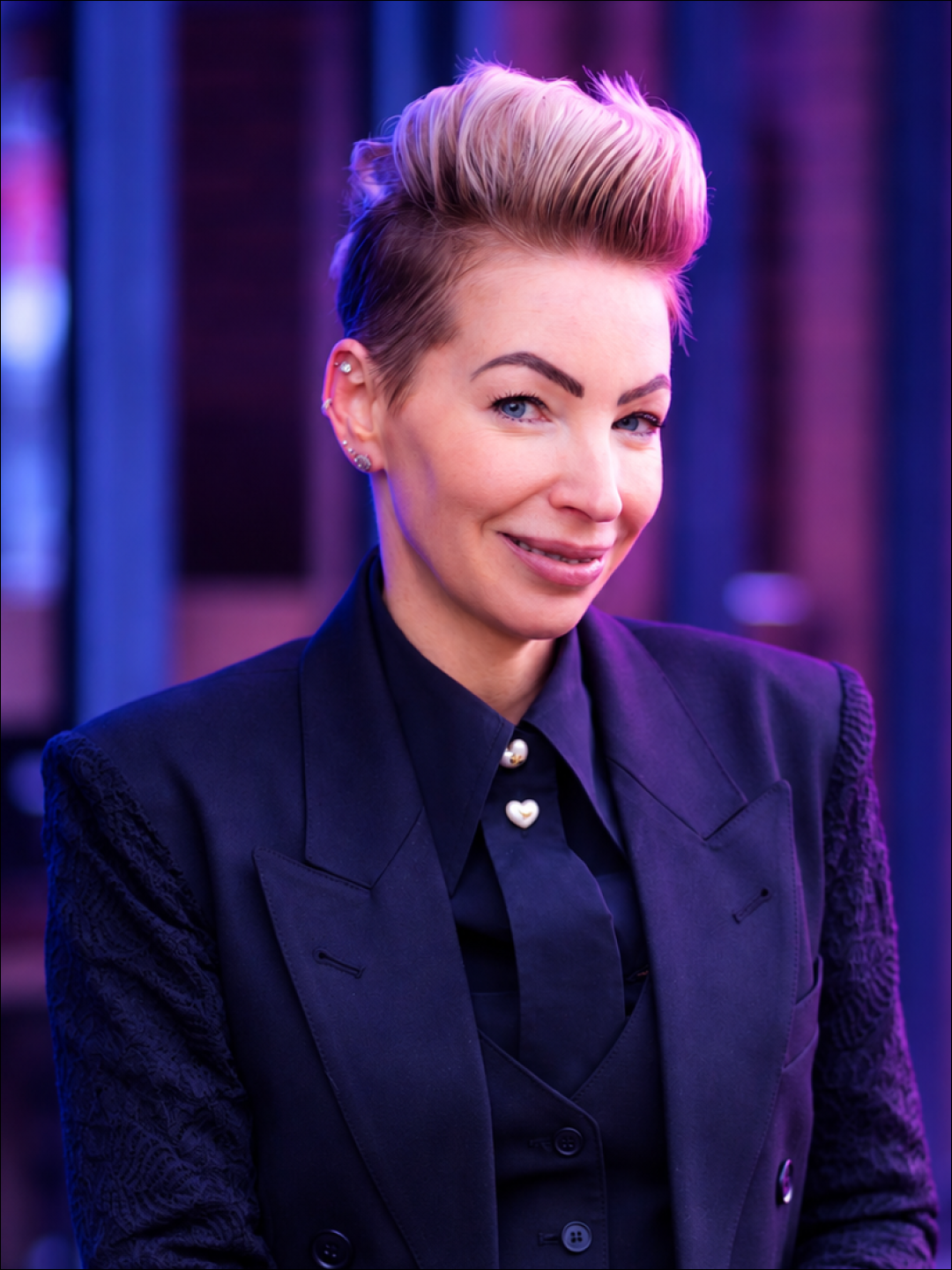 Guest
Guest