Pete (01:47.033)
Hey Brad, how's it going?
Brad (01:52.652)
Okay. Perfect.
Brad (02:01.111)
Good Peter, how are you?
Pete (02:02.711)
Not bad. Thanks for connecting. You know, it's it's funny 'cause I feel like we've been in similar circles for a long time, but I I know you through Jeff over at Trigger, so it's nice to finally meet you in person.
Brad (02:13.387)
Yeah, likewise. I think we we know a lot of the same people. Calgary's a pretty small, tight knit community. So it's it's funny that we've never actually met before.
Pete (02:23.628)
Right. Yeah. And you know, Trigger and ZGM are sister companies if you go back far enough, right? We both spun out a parallel
Brad (02:30.431)
I I heard, yes. Yeah.
Pete (02:33.366)
Yeah. Yeah, you were well, you were Axia, I believe, and we we we were zero gravity back in the day and like zero ZGM was spun out to be kind of like a performance paid on results kind of model at the worst possible time. Like it was w everything was the dot com bubble was crashing and it was the absolutely wrong time to do that. So we switched very quickly to fee for service. But I think that was the original impetus for z zero gravity.
And Axia Axia was more the agency model that we eventually just adopted too. So yeah, kind of a neat, I don't know, brother sister scenario. so we had reached out a little bit. So you are well, why don't we start a little bit just with your origin story? Like how did you for how did you get into this whole industry and then specifically how did you get into AI at the end of it here?
Brad (03:10.359)
Yep. Yep. It's that small world.
Brad (03:27.829)
Yeah, for sure. so I guess it really started for me in shop class in junior high at Bishop Pinkham Junior High here in Calgary. we had I I don't know if it was Photoshop or something very similar to Photoshop, but basic photo editing software where you could lay things out and make edits before you built something, I guess, in the shop. but I got preoccupied with
Pete (03:38.057)
Ha ha ha.
Brad (03:56.824)
Doing head swaps and taking photos of people and just swapping their faces around or or putting putting heads on bodybuilders, which is kind of the the story behind my profile picture of me with a a big buff body bodybuilder body. and just kind of an inst
Pete (04:11.522)
I didn't know if it was fake or not. When I saw it, I'm like, wow, Brad's huge.
Brad (04:16.429)
Yeah, it's well, it's it's kind of also an inside joke for anybody that knows me because I've I've always been quite scrawny. So I just thought it would be hilario hilarious to have a a big giant bodybuilder body. And then yeah, it's just kind of a nod back to how I got started in like graphic design and image editing and stuff. and then after high school, I took a course at a place that's now
Closed, but it was called Applied Multimedia Training Center. And it was like a a one year course that just basically got you set up and taught you all the programs, Quark Express and Freehand and all the all the stuff that we were using back then, and then kind of starting into Adobe at the time. And yeah, they just kind of taught you how to use the tools and gave you a bunch of projects throughout the year so that you'd have a portfolio started or
something you could take around to to show people to get try and get a job after you graduated. so that was in 2001. and then I worked in-house as a graphic designer at a place called Fitter First here in Calgary that makes like balance balls and wobble boards and all sorts of physic physiotherapy rehabilitation sort of equipment that's all kind of balance focused. And I was there in-house
graphic designer for a few years and then I was friends with somebody that I went to applied multimedia with, Kelsey Horn. And he got a job at McLaren McCann. And he took me to the agency one day and I was just all starry eyed. I was like, man, this is so cool. Like they had po posters of some of the ads that they had done up on the walls. And I was just like, you did this and you did that. And I I was just like fell in love with it right away. And so he kind of mentored me and he's like, Yeah, I can
Help you put together an advertising portfolio if you want to try and get in to as an art director someday. And I was like, yes, please. And so yeah, he kind of was my creative director and helped me figure out which ideas to flesh out and which ones to to execute and which ones to keep going on. And I had, you know, about five or six pieces that were decent at the time and and I w wasn't quite ready to start showing it off at the time yet. But he said, you should come show it to my my boss.
Brad (06:35.918)
Paul Long, we're looking for a junior right now and he he could probably give you some feedback. So I came in and I met and I met with Paul and it he didn't end up hiring me right away, but then the person that they hired ended up not working out within a week or two. And so I was the runner up and I got called and then yeah, me and Kelsey started working together and we were a double art director team for several years and we stayed at McCann for a while and then we went to taxi together.
Pete (06:41.618)
I remember Paul.
Brad (07:06.124)
And then after that we parted ways. I went to Wax and he's he's gone on. I think he's now at no fixed address. And I think he's like the chief creative officer. He's he's climbed about as high as you can climb on the creative ladder there. and I'm I've now been at trigger advertising for about it'll be seven years next month. so that's that's kind of brings us brings us up to speed of like how I got where I am now.
Pete (07:21.649)
Right.
Pete (07:28.849)
Wow. Yeah. I didn't know.
got into it. Yeah, the I find that the you know it's such a I love these stories 'cause it really is, you know, there's always a an element of luck, not to say y you needed it, but, you know, I my career very similar where I I I think there was an element of someone doing me a favor or someone helping me with that last little bit to get your foot in the door or have that conversation. And I think so often people are busy trying to polish their
Brad (07:35.906)
Yeah.
Brad (07:46.961)
they're for sure.
Pete (08:04.28)
resume or their work to like a perfect diamond and they never actually show it to anybody or or it's never seen. In the meantime, you know, someone who's actually just talking and and getting it out there even though it's uncomfortable, I just love stories like this of just like, yeah, just push, get it out there, don't wait. because someone else will be doing it and maybe you're more talented and you think you deserve it more. But if no one sees it, you know, you never get the opportunities.
Brad (08:30.412)
Yeah. I remember also speaking of that, another person that really helped was Steve at Highwood. I can forget his last name now, but he was one he was somebody that I had sent a few of my pieces to and he got back to me and gave me some like just really good constructive feedback of like like what do you why why are you doing ads for TELUS, like stodgy companies? Like this is this you're a student, like you can be doing anything you want. Like don't limit yourself to these corporate boring ads. And I was just like, Yeah.
Pete (08:39.245)
right.
Pete (09:00.122)
Ha ha.
Brad (09:00.536)
So then I started still then I started doing spec ads for seven eleven and electronics boutique video game store and just like stuff that I was into and yeah, it just made my portfolio so much better.
Pete (09:12.994)
It's funny. Hey, you listen to these wax and highwood and you know
Brad (09:14.614)
S Steve Williams. Yeah, that's who it was. Yeah.
Pete (09:16.922)
right, okay, yeah, Steve Williams. Yeah. These agencies, big agencies that have come and gone is is crazy at the moment. But you know, Trigger and ZGM, they must be similar of age. I know we're celebrating our twenty fifth anniversary this year, and you must be in a similar state if you count Axia and whatnot. This this is a h a long time for a a company to be around these days. So that's pretty awesome. So okay, so you've been you were doing that and then
Brad (09:40.812)
Yeah.
Pete (09:44.694)
AI comes along. Was that an easy transition for you? What did you think when it first came out? How was that hitting you?
Brad (09:52.935)
very easy. Yeah. I actually remember pretty clearly my first taste of mid journey beta back in what was it?
Probably around yeah, it was March twenty twenty two. So eight months before Chat GPT even came out and AI was not really anything any anybody knew about, which I still have a problem with the term AI, but that's that could be a whole nother podcast. I feel like it's such a misnomer and it's such a blanket term for so many different things these days. But yeah, I remember getting Yeah. but I I started seeing some people posting on Twitter.
Pete (10:28.213)
Yes, the new digital.
Brad (10:35.554)
Back when it was called Twitter, just these images that they had generated and saying, I made this with Midjourney. And I was just like, What's the what's Midjourney? And just started going down this rabbit hole and found out that it was this invite-only thing that you that ran on a Discord server. And so I I reached out to somebody and got a a code or an invite somehow. And I remember the first few days, actually nights that I spent on it.
stayed up almost all night just mind blown at how much fun and how crazy and weird and exciting. And I just I w I knew that like nothing was gonna be the same. I knew that it was I could see like starting to extrapolate the ramifications of where it was gonna go. And I was just like this this changes everything. And it was like it was terrifying and it was hilarious. I I remember laughing so hard I cried at some of the things
People were generating because you could see you they had separate chat rooms and you could see what other people were generating, and you could riff on other people's generations and they could riff on yours, and these themes would just emerge of everybody kind of generating similar sort of topics or themes or very just going off in all these random directions. And I remember one one time a few a day or two in, and it was unlimited. There was like no tokens, like there's no limits to how much you could generate.
Pete (12:00.5)
Right. wow. Yeah, yeah, right.
Brad (12:03.33)
And I remember a couple days in one one night it the service just stopped working. It's like it just stopped generating stuff. And everybody kind of congregated in the in the main chat room and they're like, What what happened? Where did it go? And they're like, Can I shower now? Can I eat? Like people people like me had just been sit there sitting there for hours, just transfixed by this genie that was getting let out of the bottle. so that's that was
Pete (12:19.057)
Ha ha.
Pete (12:28.202)
Right.
Brad (12:29.922)
my first kind of introduction to AI and I still kind of have a special place in my heart for mid-journey. it's
Pete (12:37.834)
Yeah, is that still going? I remember I remember getting into Mid Journey the same way through Discord and just feeling like, What is this? Like it just feels like you're going through these crazy back doors to get into this almost like non interface area.
which is not something that I think everyone's used to. So it did feel a little bit like, What am I doing here? but is it I I know they eventually put a new skin over it, like a new interface and made it more appy, but is it still running?
Brad (13:06.562)
Yeah. yeah. still thriving actually. So it still is can be run through Discord, but they do have a website now, which is what I mostly use it through, which is a lot more intuitive and and simple to use. but still has quite a few granular features of of things that you can tweak and settings that you can play with.
Brad (13:32.119)
Yeah, it's like I said, it it kind of it will always have kind of a special place in my heart as being kind of my first taste. it but there is something about it, about their model that just has a certain aesthetic that other models just can't quite seem to get. they they do they have a bunch of really smart, talented people that work there. And the guy that started it or created it, David Hol David Holtz, David Holtz.
He's like this polymath mad genius guy. He's got like an applied math and physics, neuroscience, philosophy background. And he used to work for like NASA's Langley Research Center and the Max Planck Institute. And like he's just super smart and accomplished. And it's basically his pet project. And he doesn't want to sell it. It's completely bootstrapped and it's profitable. And they put almost all their money back into R and D.
to keep pushing the model. And they have a bunch of secret projects go ongoing of like things that they're working on for the future, which they just revealed one about a month ago that was a new full body MRI scanner that like dips you into a little pool of water and it takes about a minute and does does this super high-res full body MRI scan. So that was their first secret project that they unveiled using their their image
Pete (14:44.288)
I've heard of this.
Brad (14:53.804)
diffusion technology for for medical purposes and apparently they have a few other things they're working on as well.
Pete (15:00.368)
Yeah, that's the kind of things like you hope to hear about with all this new technology is yeah, like that sounds like something for good instead of like how to tweak the, you know, social algorithms and all that kind of stuff. The yeah, that's interesting. And so after that, was it Dolly? Was that the next image generator to hit the the floor or what was it after that? Was it
Brad (15:20.94)
Yeah. Yeah. I I think it was Dolly and Stable Diffusion right around the same time. Dol Doll Dolly being OpenAI's image model. And then Stable Diffusion was an open source image model, which anybody could download and fork and make their own version or or make their own flavor of it and tweak it and kind of customize it as much as they wanted. and then after that, along came
Pete (15:26.326)
yeah.
Brad (15:50.401)
Adobe with Firefly and then Shutterstock has an AI that is was decent. I haven't used it in quite a while now, but that was kind of the the first kind of wave of of of models.
Pete (16:04.069)
Yeah, okay. So so you were working with all these and you can see you know, it's so funny to watch. I think a lot of people had these experiments where they try the same prompt, you know, every year and you just see the progression of how better and better and better these things got. I remember I was trying 'cause of working in drinks at the time, I like, I I'm trying to get an arrow to shoot through a pineapple. That's all I wanted, just like straight through on the side. And I've I've got so many hilarious images of everything but what I was trying to get done.
but you can see the progression and now like what are you using today if you're doing image generation?
Brad (16:42.414)
well about a year ago Google came out with Nano Banana, which I feel like was another kind of watershed moment or giant leap forward in image generation, in terms of fidelity, quality, coherence. gone are the multiple fingers and the garbled text. you can upload like a dozen reference images and it
Pete (17:03.999)
Ha ha.
Brad (17:10.4)
is able to cohesively tie them together and manipulate them with your with your prompt of exactly what you want it to do or how you want them to to be displayed or shown or interact. and then so for the first three months ever for the first year, about every three months they came up with an update of it and it just kept getting better and better, almost like clockwork. And so I'm expecting a new one to probably be a new version probably to be coming out anytime now.
and then a couple months ago, good A OpenAI came out with Image Gen Two and F Flux now also has another kind of next frontier model. So those are probably the top three I would say for for image generation right now in in terms of quality and coherence and reliability.
Pete (17:59.512)
Do do you find that like you use one for certain purposes and another for others, or is it just like whichever's the the best flavor of the month, you're just using that until something overtakes it?
Brad (18:12.648)
I use kind of the the big two that I use right now are are a nano banana and GPT image and I'll just go back and forth if one is not doing exactly what I want, or sometimes I'll just try it in both and pick the pick whichever one executed it better. but some some sometimes one will do certain things better and sometimes the other will. we have a subscription to a platform called Magnific through our through trigger. And what it does is it kind of
has all the models in one place. And anytime a new model comes out, it's just like it's there the next day and you can start using it. And it has all the it has a stock library of assets and it has generation assets for images and video and audio. And it's all in one platform. And they have like a they have like a node based interface where you can kind of almost drag and drop these these tools into a a workflow and move them around and tweak them so you can say,
Pete (18:45.311)
cool.
Brad (19:11.832)
generate an image and then you can plug that into a video node that will animate it and you can give it a prompt of what you want the video to do and you can plug in an audio prompt and say here's what the audio should sound like and like you can just kind of plug in plug and play and match these these nodes or these assets. so yeah.
Pete (19:32.862)
that's awesome. I like that just because the kind of the idea of trying to keep up to all of these individually and know what's coming out and what's, you know, the best one to use and stuff can be somewhat daunting. So having someone just figure it out for you makes a ton of sense. Hi if s if someone's like just getting into this and never done image generation before, what would you suggest? What's the best way to get started? Or what are maybe some of the common
Brad (19:49.198)
Yeah.
Pete (19:59.861)
pitfalls people fall into when they're trying to do this.
Brad (20:03.974)
most of the tools are pretty good about giving you free credits to to get you hooked. I think my the one I always just recommend people start with is Google. it used to be called Google Labs, Google Image Gen, but now it's called I think they called it Google Flux. so if you just go onto that website, you can start playing with their image generator. And I don't
Pete (20:10.315)
Yeah.
Pete (20:24.645)
okay.
Brad (20:31.854)
think it limits you how many generations you can have. It might slow you down after if you start abusing it or using it way too much. But the last time I used it, it was pretty still unlimited. and yeah, it's just super easy to to just start playing around with and and seeing what you can generate using your imagination. Which is something I also love about Mid Journey was back when it first came out, you in Discord you had to type slash imagine and then your prompt.
Which I always thought was was what I always thought that was such a nice touch of imagine this, because like there's a there's an artist that said, it's like AI image generation is like a camera for your imagination. And I was always like, Yeah, that's that's so true. I always thought of it as like the internet and photography had a baby and we all got access to it at the same time. That's how I I've always kind of thought of it.
Pete (21:01.958)
right, yeah.
Pete (21:17.382)
neat.
Pete (21:29.949)
Well it's nice to put on the kind of creative lens to it because it you know, I s obviously got some backlash too, right? Where people are really worried about AI slop these days, a big phrase of the year. and just people using it, and just you know, taking people's heads without their permission and putting them on different bodies and all those types of things.
Do you find do you do you find people are worried about that when you're talking or do you like when you're using these tools, do they do they ask w whether you're using AI or not these days? Like how does that conversation go with you?
Brad (22:10.382)
depends on the context. I mean, if it's just personal art or whatever p posted. yeah, there there's as you say, a lot of backlash in comment sections of anybody anybody that can detect remotely that something was made with AI, a lot of people will just rail against it. And my fa my favorite story of that was the the artist, his name's Shloms, and he posted a a
An image of a Monet Waters Lily painting on on Twitter a few months ago and said, I generated this image in the style of Monet. Please explain why it's inferior to a real Monet. And people tripped over themselves to leave hateful comments by the hundreds of this is this is soulless slop. The composition is shit. The colors are muddled. The technique is horrible. This is this is just.
Pete (22:56.166)
Ha ha.
Brad (23:04.942)
terrible. And then a few days later he said, Well, actually this is just a a photo of a a real Monet painting that hangs in such and such museum. And by then he had already he had already quote tweeted all of the best ones for posterity because then they they all quickly started getting deleted. But it was just such a such a wonderful case study or example of how perception will kind of shape people's opinion and if something is
framed as this was made with AI, a lot of people will just reflexively hate it.
Pete (23:36.442)
Yeah. Yeah, I get it. I feel like there's a bit of a bandwagon and the and a knee jerk a little bit to this because it's it's uncomfortable territory and it's just new for a lot of people and it feels like a change is happening and the I I get both sides. I totally do. I feel like it's it's something to to keep your guard up against from a creative point of view, but also
I I also feel like it can get you to places you never would have got to as well, right? Like when you are storyboarding or trying to come up with ideas, you know, it can be strange and wonderful and just push you outside of your own comfort zone and be like, I would never would have thought of that. That's insane. so I do love that idea. That's no, that's that's amazing. and the where was I going with this?
Brad (24:20.568)
Right. Yeah.
Brad (24:35.106)
I guess like if you want to get into like ethics and copyright, yeah, a little bit more. I think obviously right now everything's still tied up. Courts take quite a long time for for these cases to work their way through and up the up the system. So they're still waiting for precedent to be set on how how much these image company genera model generators owe and who they owe it to. Like luck.
trying to adjudicate who owns the concept of double exposure photography or cross-processing or name any name any specific style or or technique, let alone all of them and all the new ones that are coming out every day. So I I yeah, I don't under I don't know how that's possibly going to work out, but the genie is clearly out of the bottle. And I think all you can do is use your own
moral compass and ethics as a as a guide not to to not to try and blatantly steal people's work and rip rip off
other people's aesthetic or or specific style in in a way where you're trying to get away get around paying them for their work.
Pete (25:53.537)
Yeah, it goes with stock and whatnot too. I think there is this fine line of
Like you s we were talking about this before, but you know, you take a stock image that you should have paid for, you're using it as a reference and you're modifying it a little bit, it's it's super dicey ground. And you know, the what we do at work is with prompting and stuff is like don't put anything you wouldn't be comfortable having the client look over your shoulder and watch you do. I think that you can you can st stretch that out to anything and be like, Hey, if you were
Imagine the artist looking over your shoulder. Would he be upset? Then you're probably not doing the right thing, right?
Brad (26:33.622)
Exactly. Yeah. And then just like dealing with clients, I think you it's always important to just be really explicit and and let them know if you're planning on using it t for execution, how you're planning on using it, and just always being super upfront and not not trying to be secretive or or sneaky about it. so that yeah, nothing you can't get in trouble for
down the road for them not being aware that that it was made with AI. If they come back and say we're getting negative comments on our on our post or our our ad, that everybody hates it because it's slop. Which which Instagram now is just littered with that GPT flyer style of of slop. And if you click on any of the comments, about 95% of them are people calling it out as slop and saying this is lazy. This reflects very poorly on your business that you would
Pete (27:11.904)
Yeah.
Brad (27:29.016)
cut corners like there's one that I keep seeing for a home inspector and people are like, Why would a what does it say about a home inspector that you that you use GPT ads to to cut corners?
Pete (27:42.944)
Yeah, there's a little bit of brand preservation in there. I get that. But do you feel like is it getting im well, I I think this is an obvious question, but is is it getting harder and harder to tell whether things are generated or not? And will there be a point where it's just generally impossible other than the crazy subject matter that you've chosen?
Brad (28:05.314)
yeah, I think it's f for people that don't know how to use it or haven't used it very much, I think it's very easy and obvious to spot, like the GPT flyer style, for example. But for art directors or artists that know how to use it or are very comfortable and have a experience using it, I think it's basically indistinguishable at this point. Image generation specifically, I think video isn't still quite there yet, but image generation, I think.
Pete (28:16.319)
Yeah.
Brad (28:35.512)
to the to the Monet example, you could post a a photo of a a painting or a photo or an illustration. And I don't think people if if it's done correctly or done well, I don't think anybody would be able to tell at this point.
Pete (28:52.211)
Yeah, I I agree.
Brad (28:53.27)
And it's only gonna it's only gonna keep getting better. We're only, like I said, like five years in and five years from now, I think it's just people will just accept that the way that we accepted that every image you see in a magazine has been photoshopped. I think almost everybody will just default to to thinking that that any image you see was either generated or enhanced or edited with the help of of AI.
Pete (29:20.806)
Mm-hmm. Well, I know that you and I can appreciate a little bit some of the shortcuts that this is allowing just because these things used to take so long, like cutting out hair out of a background or tr well, we couldn't even do this back in the day, but up rezzing an image is just a delight because of how you used to have to struggle with that stuff that kind of thing. right.
Brad (29:44.557)
And gener generative expand, like how long it used to take to uncrop a photo or to add more to a photo to clone using the clone brush and layers to try and blend it so it's seamless. And now it's just like you just expand it and either just let it do its thing or you can prompt what you want it to be. And a few seconds later, here's three options. Do you like any of these? Great. Choose that one or keep keep try try again or tweak the prompt and and get it a little bit better. And yeah, it just
Pete (29:57.562)
On your phone.
Pete (30:07.697)
Ha ha.
Brad (30:13.4)
There's a few hours of my life saved that I I would have had to to do it manually.
Pete (30:19.325)
Yeah, no kidding. I any tips like if you're just kinda getting going and and just finding yourself getting in a little bit of a rut? I know that myself I've had stuff where it's like I keep trying to say the same thing and it keeps giving me the same thing and I'm just had going into a basically an argument. Why can't you do this? Right? any any guidance?
Brad (30:39.416)
Yeah. Yeah. I have a few tips actually that I've jotted down because I I'm when I when we spoke earlier, you'd you'd asked if if I had any any tips or tricks. So I I thought of a few here. the first one is the old RTFM read the read the effing manual. almost almost every image model will put out s like a documentation or a user guide.
that will show you some of the basic and some of the advanced features and and knobs and that you can tweak. So what when you finally find one, if it's Google Flux or Midjourney or GPT image, what whichever one you start playing around with, just look around or ask an LLM what where the best tutorial or the best user guide is and just read it. Just go through it and and you'll be amazed at all the little
quirks and and little things that you learn and find. And then and then the biggest thing is just experimenting and trial and error and and g seeing what it can do and seeing what it can't do. another tip is marking up an image, like how we used to to take a photo and mark up changes on it and then give it to a production artist. You can basically do that with nano banana or GPT. You can go into MS Paint or Photoshop and just
Pete (31:44.932)
Hm, awesome.
Brad (32:03.214)
Put a put a text box in an arrow that says change this girl's shirt to purple. Put a you can draw a circle and say, put a tree here. You can just mark it up very crudely and it'll do exactly what you say. Just say, and then just you you upload that marked up image and say, make the changes as noted in the image or as marked up, and it'll do exactly what you wanted.
Pete (32:25.87)
I love that.
Brad (32:28.09)
using an LLM to help refine your prompts. So you can write a basic prompt and then you can use your favorite LLM to expand it or to to say, hey, I'm gonna I want to generate an image of this and I want it to be in this style, or you can give the LLM an image reference and say, What's what's this how would you describe this image? what what style, what camera angle, what filter, what yeah. And and it can
Pete (32:55.449)
And are they smart enough to know that if you were saying, Hey, describe this image, I'm I want to put it into nano banana, so please like use the guidelines that would best suit that that product, would that work?
Brad (33:09.378)
Yeah. Yeah, I think most modern LLMs would would know how to prompt
Different image models, it it'll know, yeah, if you're using nano banana, it'll know that it can have a much longer prompt and that all the specific details that are in that prompt will be adhered to. Whereas if you're using an older model, it'll know to keep it a little bit shorter and simpler because on those older models, if you had a verbose or a very long prompt, it would pay attention to the first few sentences and then anything specified in in middle or end kind of sentences towards the end would
Pete (33:17.347)
Like that. Mm-hmm.
Brad (33:46.424)
Just kind of get glossed over.
Pete (33:48.729)
Mm. Yeah, yeah, got it.
Brad (33:49.819)
starting with a rough sketch or a photo as an input image is a huge hack. So if you're trying to create something and it's just never generating the way you want, just grab a p pencil and a paper or a sharpie and a and a paper and just do a very crude rough sketch and say, you know, this is how this is what it should kind of look like, or this is the shape it should be, and then just, you know, enhance this and make it photorealistic and
You know, it should be this color with this this type of material and it should be shot in studio with a white seamless backdrop with soft shadows. so yeah, just starting off with something as a as a reference or a a mock up of what you want. I think a lot of people forget that a lot of people forget that you you don't have to just give it a pure text prompt that especially yeah, like with these new new models, the an image reference goes a r very long way.
Pete (34:36.149)
I love that.
Pete (34:41.601)
Yeah.
Brad (34:48.086)
And gets you away from that if you're if you're doing like a design mock up or something like that, it gets you away from that GPT flyer aesthetic. if you can if you can give it a very rough mock up that you've laid out. there
Pete (35:03.07)
Yeah. Well and everyone's got like an image in their head usually when they're when they're thinking of something, you got something going and quite often you get disappointed by what you see because it's not exactly kinda how you pictured it. That sketch, what a great idea. Like just like sketch it out real quickly. And like you said, it doesn't have to be you don't have to be an artist to just kind of rough it out, right? Yeah.
Brad (35:06.894)
Yeah.
Brad (35:24.024)
Exactly. you can you can spec colors with hex codes is another thing that I think a lot of people just forget. Instead of just saying I want it to be maroon and tennis ball yellow, you can say, I want it this this, you know, jacket or the background color or whatever the the product should be the hashtag six two one D one D and the the shoes should be hashtag D three seven nine and it'll it'll or you can just scan
a photo of what exactly what color you want and say make it the color of you know the the car in this photo or you can take a screenshot of the brand standards of the color page and that has the color recipe on it and just say use these colors as the as the color palette or the color scheme. leveraging your own specialty or insider knowledge is another big thing. So everybody kind of has a obviously a unique background and a skill
Pete (36:12.541)
That's a great one.
Brad (36:22.58)
set or a a talent stack of what things that you're into or jobs that you've had before, whether it's like you used to work at a print shop or you're a photographer, you like photographers, I feel like have such a leg up in in this technology because they already have the vernacular and the vocabulary of all these kind of niche terms of you know, focus and camera lenses and types of lighting and techniques, like I said, cross processing and and
double exposure, like all these random things that a lot of lay people just wouldn't think to to try or to use. Or maybe you you work in fashion and you know a lot about materials or anything anything like that that you can leverage your images that use that sort of insider knowledge or that knowledge that's in your brain or the cross section of all the things that you're into will make your your images stand out and a lot more unique. getting again away away from that kind of
average mean distribution. I was just listening to this podcast a couple d a couple weeks ago where this guy was talking about getting out of distribution, which is means the distribution being like everything that the model can actually produce based on what it's been trained on. And like if it's never seen like I don't know, say Apple comes out with a helmet that let allows you to telepathically communicate.
And you try and prompt it, it doesn't it doesn't have any images of what that looks like because it just came out. It what it doesn't have any images of it in its training model. So that's out of distribution. So it it could never it could never show that. It could get close. It could be like, it's kind of like a a motorcycle helmet that's white and sleek. But to to be able to get out of distribution, you need to be very, specific with, like I said, the insider knowledge or your image references.
One example he said was go down your street and take an iPhone photo and use that as an input or a reference image. And now you have a one of one re reference that is out of distribution and will kind of sway the algorithm away from that medium, medium of the the the the bell curve of of doing the average of what it always wants to do.
Pete (38:38.442)
I I love that thought. Yeah, just of like creating something unique to start with even as your prompt, 'cause you're right, 'cause all these models are trained on the same data. and even to your point, the training data cutoff date could be six months ago. So anything beyond that it doesn't know about either. But having something truly unique to start with, wow, that's a great that's a great one. I love that.
Brad (39:03.214)
here's one for art directors. If you're working on a brand identity or a logo, it's never been easier to once you have that logo designed and the color palette figured out, to upload that and say, show this on a baseball hat, show this on a store sign front, show this mock-ups. Like how many hours have we spent mocking up logos on things or find looking for PSDs where you could.
Where you could have a smart layer where you can swap in your own logo and a lot of them you have to pay for. but now you can easily and quickly generate that. And again, it's just another thing that saves you a few hours that you otherwise would have just spent pushing pixels around, doing it manually, and it looks amazing.
Pete (39:33.942)
Mm-hmm. Yeah.
Pete (39:50.657)
I was just doing that the other day. In fact, I think you can get lucky sometimes where you're like, Okay, this is a sports brand. I want a series of sports mock ups and just see what it comes up with. Sometimes you're like, I never would have thought of, you know, putting it on a baseball glove or something like that, right? So it's really cool. Yeah.
Brad (40:08.908)
Yeah. Yeah. yeah. If you don't know or you if you want some ideas, you can just say make a mood board of of products or swag featuring this logo and you know, make make it a nine by nine grid and then just keep generating new ones. another fun thing that it was that I did with Nano Banana when it first came out was family photos, which are always kind of a pain in the ass because you know the kids don't want to go and no no nobody's in a good mood and
Pete (40:34.381)
Ha ha ha.
Brad (40:37.666)
So now it's super easy to make a family photo. If you I just got my family to stand against the kitchen wall and took a photo of each of them and just composited it into one image so that all of our heights were were relative to each other. And then I gave that to Nano Banana and and I said, you know, family photo. They're all wearing red sweaters on a in front of a a brick fireplace. And now I make them a goth family and they're all wearing black and and with
Pete (41:04.373)
Well.
Brad (41:05.122)
black and white makeup, make them a nineteen seventies family, make them a nineteen eighties family, make them a nin nineteen seventies or sixties family. And it's just super fun.
Pete (41:14.653)
Or hey, make them look like they're having a good time, hypothetically.
Brad (41:17.486)
It was it's funny. one of them it actually every now and then it still does hallucinate a little bit. So one one of them it just added another kid to our family and we're like, hey, who's who's that fourth child? It's the child it's the child we never had from another parallel universe.
Pete (41:33.739)
Yeah. What do you know that I don't know? Yeah. that's crazy. Yeah, that's a great idea too, 'cause you know, those are a nightmare every year. And it usually falls to whoever uses computers for any sort of living. It's like, you can do photography, right? So the way you go.
Brad (41:37.102)
Yeah.
Brad (41:50.944)
Yeah. Yeah.
and then just like staying current and staying up to date wise. my favorite podcast for image generation is called Fast Hours. It's on I think every major podcast platform, but it's these two guys that yeah, just talk for a couple hours a week about image generation. And they now they've started talking about more than just image generation. They get into to LLMs and video and just anything AI. It used to be called mid journey fast hours because that was that's what
Mid journey called them when they started monetizing was if you, you know, buy this tier, you get two fast hours of of generations. And then it kind of starts slowing slowing down your generations and makes them take longer. but then they just dropped the mid journey and started calling it fast hours. and then there's another podcast called AI for humans, which is again just more general AI. It's a it used to be weekly, now it's twice a week podcast just of
They just talk about anything that came out, anything that's happened or anything new in the world of AI. And it's just a a good way to to stay current and some pretty funny hosts with some interesting stuff that they show and talk about and always interesting.
Pete (43:12.075)
Cool. I will try to remember to put those into the show notes 'cause that those sound great.
Brad (43:17.932)
And then like just on Twitter or Instagram, curating your algorithm or just starting a new account where you only follow people that post interesting things, you can really cu curate your own feed now and train the algorithm to only show you things that are cool, that are whatever AI or photography or illustration focused, and and always be getting inspiration and and seeing what people are doing with whatever tools on those.
those platforms. And yeah, if you just if you just spend a little bit of time liking and retweeting and following or reposting and following that everything you interact with trains the algorithm to keep showing you more of that. So that's another
Pete (44:01.714)
Yeah, I find even if you pause long enough on one thing it's a signal, hey? Yeah, geez.
Brad (44:06.722)
Yeah. Yeah. And then of course artificial breakdown. Everybody should be everybody should be subscribed to this podcast and they should tell tell a friend about it so that it can keep growing or suge suggest suggest new guests.
Pete (44:17.117)
Yeah. I was gonna say. Yeah, thank you. I yeah, I don't know. This is great. I love these little tips and tricks 'cause again, these are things that, you know, you can start using right away. I think almost everybody's probably at this point tried at least to make a couple images and
you know, to some degrees of success and failure. So it's really good to have some sort of guideline and it's definitely a treat to have someone like yourself on the podcast who's does this for a living and has a long career of doing kind of image work and and graphic design and art direction and and it's so nice to to kind of get these these tips first hand. So thank you. yeah, no, I appreciate it, Brad. And and come back any time. Obviously
Brad (44:59.31)
Well, thanks for having me.
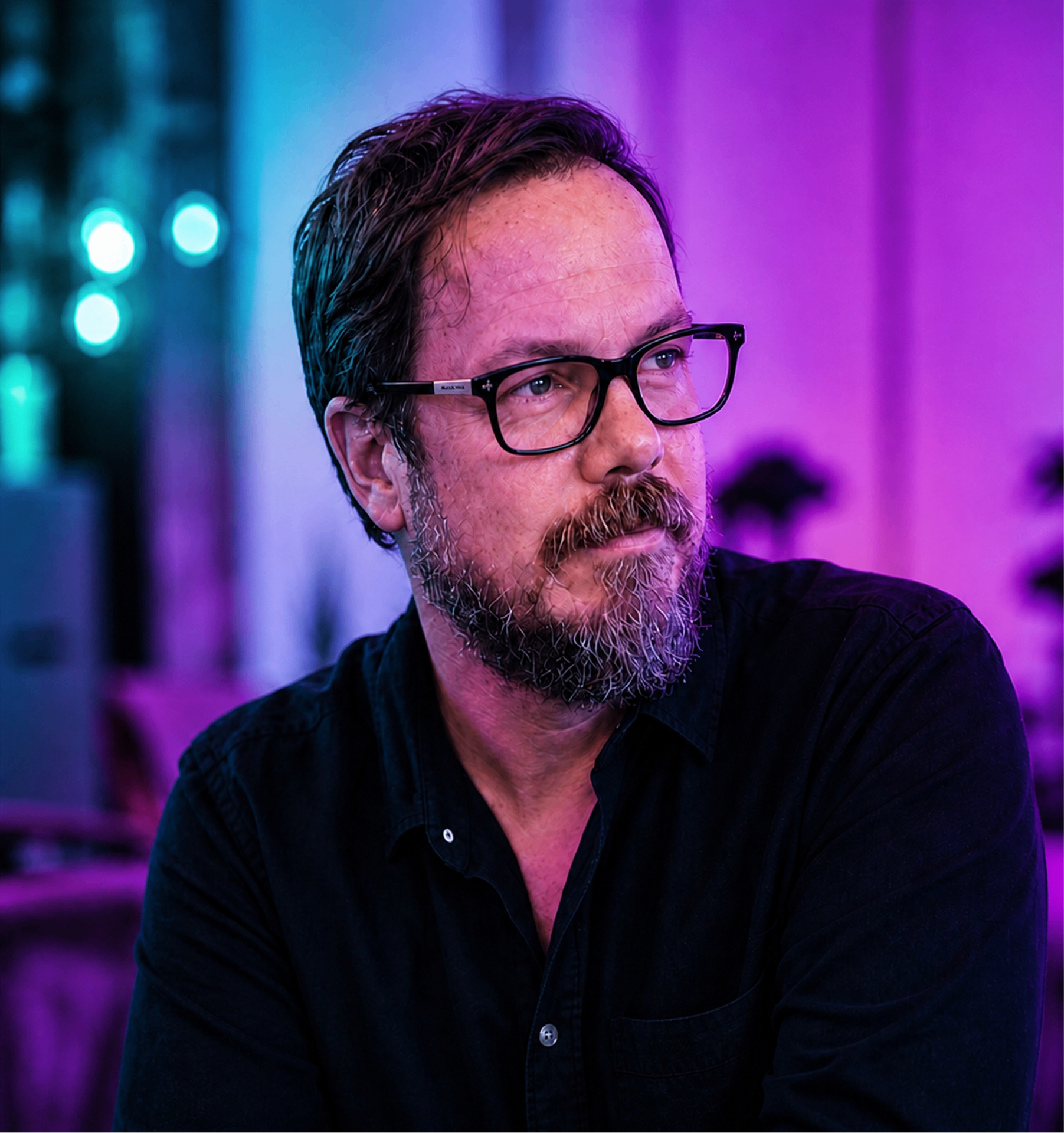 Host
Host Guest
Guest